Close

Who We Are

Strategic Plan

Board of Directors

Staff

Annual Reports

Overview

Transition Services

Sample Daily Schedule

Facilities Tour

Overview

Measuring Success

Success Stories

For Caregivers

For Professionals

Fees for Service

Apply

Corporate Partners

Planned Giving

Donate

Wishing Well

Summer Solstice 2027

Exploring Mental Health 2026

Social Media & the Mental Health of College Students

As if 15-page papers and pop quizzes in college weren’t enough, sometimes Snapchat, Instagram, YouTube and other social media sites make balancing your online social life with your true social life tricky. It’s no secret that most people present their best selves online. While photos may tell an idyllic story, they might not tell the full, less perfect picture. There are positive aspects to social media, but depression and loneliness may creep in when you compare yourselves to others on social media.

College students spend 8-10 hours per day on their phones. Fight the symptoms of excessive social media usage by reducing the time you spend on social media sites. Limiting yourself to 30 minutes per day still affords you the opportunity to soak up the positive effects of social media while also avoiding the negative effects of overuse.

Positives of Social Media

Completely removing social media from your life isn’t the answer, as there are benefits to social media, especially for young adults. Social media boosts social skills, increases creativity and opens you up to support groups you wouldn’t be able to access outside of the internet. Online platforms give you the chance to develop positive human contact through in-person meetings as well, whether you want to plan an event at your school or schedule a coffee date via Snapchat. While social media is a powerful connector, it’s important to check in with yourself to make sure it’s not impacting you in a negative way.

Taking Care of Your Mental Health

College can be a difficult transition, prompting mental health issues such as depression or bipolar disorder. The balancing act of school, friends and work can become overwhelming, which is why you might find yourself escaping through your Instagram. It’s easy to ignore signs of psychosis in college and retreat to an online world. On social media, you have more control over what you see – you can unfriend people you don’t like, curate your news feed by unsubscribing from others and ignore messages from strangers. Finding someone to talk to about your mental health plan will help your state of mind if you’re struggling to adapt to college.

In 2017, people ages 18-25 had the highest prevalence of mental illness among U.S. adults at 25.8%. Social media usage isn’t entirely to blame for the high percentage, but social media can be toxic, leading to cyberbullying, less face time and increased comparisons between yourself and all of your followers (which are inevitable).

While major depression is a diagnosable mental illness, some students simply have difficulty adjusting to campus life. For both situations, drastically reducing your social media usage to about 30 minutes per day can decrease both depression and loneliness.

How to Cut Your Social Media Time

You might need to check social media every so often for college events, to socialize with new friends or maybe even for class projects. But try to spend less time on social media by using these techniques.

  • Turn off any social media push notifications on your phone.
  • Switch your phone to grayscale. When you can’t see brightly colored pictures on social media, you cut your desire to keep checking.
  • Check your social media accounts at the same time every day and set limits on how long you can spend on each site. Start by reducing your daily scroll to three times, then decrease as you see fit.

Social media might boost your mood when you’re feeling down but it can also impact you in a negative way. Limit your social media use and opt for interacting with your peers around campus.

What Parents of College Students with Psychiatric Disorders Need to Know About HIPAA

HIPAA, the Health Insurance Portability and Accountability Act, passed in 1996, governs medical insurance practices in the U.S. If your child is transitioning from one job to another, HIPAA ensures they do not lose health insurance coverage – so they can still receive care for their mental illness.

Another facet of HIPAA is its privacy rules, which combat discrimination against those with psychiatric disorders and other illnesses. Moreover, under HIPAA’s privacy rules, your college student is in charge of their own medical records (if they are 18 or over), so you will need to have a conversation with them about how much information they are willing to share with you about their mental health and other medical records.

What is HIPAA?

There are four titles within HIPAA that may directly affect the average college-aged patient. Title I ensures health plans do not reject individuals with pre-existing conditions such as bipolar disorder or depression. Title II outlines the requirements for transmission of health-related electronic files and the necessary safety measures insurance companies, hospitals and other medical companies are required to take with all patients. All medical care guidelines and tax-related issues are covered in Title III, while Title IV defines health insurance reform in detail, further explaining how your child cannot lose coverage because of a psychiatric disorder or any other health issue.

How HIPAA Applies to Parents and College Students

Your child’s name, address, social security number, physical/mental health condition, details about their care at health facilities and information regarding how they paid for medical services are all considered personal health information (PHI).

By law, the HIPAA privacy rule not only demands PHI records be kept safe and confidential, but it also allows your child to access their records at any time. Your child is allowed to determine who else views their records, so consider having a discussion with them about this, especially if you need to access their health records while they are away at college. If your child allows you access to their medical records after they turn 18, their doctor’s office should have a HIPAA authorization form for each individual parent to complete. You child can even choose exactly what information you see. If their health information is shared, your child can find out why as well.

Education records are not considered PHI under HIPAA. FERPA, the Family Educational Rights and Privacy Act, grants parents access to educational records until children turn 18. If you are concerned about the impact your child’s psychiatric disorder will have on their grades, you will need to obtain a FERPA consent form. On-campus health centers and counseling centers are considered a part of the university and, as such, produce treatment records protected by FERPA rather than PHI under HIPAA. You may not need a FERPA consent form to access any treatment records if you still claim your child as a dependent on your taxes or if, at any time before your child turns 21, they are caught drinking underage or doing drugs.

At a time when your college student may encounter a great deal of stress, you might be concerned about the potential discrimination your child could face regarding their mental illness. HIPAA protects them against healthcare coverage discrimination, which allows you to rest easy knowing your child will not be denied continued coverage for therapy, medication or a stay at a therapeutic community if they require one.

Some parents are surprised to learn that once their child turns 18, that they no longer have a right to be informed about their child’s care, unless their child grants it. While there are some legal avenues that may provide some relief in some circumstances, it is important you keep the lines of communication open as your college student becomes more legally independent.

Note that most (but not all) mental health providers welcome your input, which can be especially valuable if your child is new to their care, and/or is in a new crisis. But listening to you creates no obligation on their part to share protected information back with you, unless your child has so authorized.

The ability to engage in important discussions about their mental health will improve their college experience and offer them long-term coping strategies knowing their parents are on their side.

Talking to Parents and Students About Residential Treatment

The topic of mental health has moved increasingly into the mainstream on college campuses, and that’s a good thing. Today, there is more awareness, there are more programs, and there is more understanding than ever before. Issues including the stigma of seeking out care, while still existent, are becoming less common. That said, mental health is still far from enjoying the mainstream understanding and support that other illnesses benefit from.

When confronted with a mental health issue, families and college students will no doubt be caught off guard, confused, and have many questions. What is the optimal path of treatment? Does the student need to take a leave of absence? Will they be able to return to school? They will likely be unsure of treatment options, next steps, and most importantly lack clarity on what the future holds. The guidance of a college health counselor can be critical.

One treatment option that may be not fully known to parents and students is residential treatment. Before we discuss situations and diagnoses that may benefit from this form of treatment, it might be helpful to break down the space more broadly to understand the full slate of options.

Forms of Mental Health Treatment

Hospitalization and Inpatient Care

Occasionally, hospitalization is necessary for optimal mental health treatment, and these patients are often referred by loved ones or a first responder. Rarely do patients choose to enter hospitalized care themselves. This form of care can be helpful in stabilizing patients during acute episodes, especially a first occurrence or initial diagnosis of severe mental illness. These patients generally need constant monitoring and medication adjustment. The goal is to get their disorder under basic control and to determine the best next steps after inpatient care.

Intensive Outpatient Care (IOP) or Partial Hospitalization Programs (PHP)

Unlike inpatient hospitalization, patients in IOP and PHP settings do not stay in a health care facility 24 hours a day. Treatment is scheduled over several hours, several days a week. The specific number of hours and days spent at the facility varies depending on the program and the patient’s needs. This treatment is often used as a step down from hospitalization as people stabilize and learn to cope with a new diagnosis or medication regimen.

Residential Treatment

Residential treatment itself encompasses a variety of settings that vary in terms of services, psychiatric disorders treated, and approaches to treatment. Some focus on community and socialization, others focus on independence. The American Residential Treatment Association (ARTA) categorizes residential treatment into four groups.

  • Clinical residential – often feature private and semi-private assisted-living style settings with professional, clinical care
  • Group residential – group homes which utilize their communities as a part of the treatment process
  • Apartment-based – offer a sense of independence with a center of treatment and socialization nearby
  • Farm-based – characterized by a balance of therapeutic work opportunities within a therapeutic community in nature, with professional clinical care

There is no right course of treatment for every person. It’s important to point out the inherent variability and personal nature of a mental illness. College counselors, medical professionals, even families and friends all play a role in understanding the needs of a someone suffering with a mental illness.

Hopewell is a farm-based residential therapeutic mental health community, and we believe residential treatment, especially for college students with certain diagnoses, has some distinct advantages compared to other types of treatment.

Advantages of Residential Treatment

For serious psychiatric illnesses such as major depression, schizophrenia, schizoaffective disorder and bipolar disorder, the most successful people learn to cope with their disease throughout their daily life. There isn’t a cure or a shortcut to achieving this balance. That’s why residential treatment can be so beneficial. It gives people the time, support and structure necessary to deal with their disease.

The first and most distinctive benefit of residential treatment is its support structure and care. While under supervision, residents are immersed in a healing atmosphere and learn to live with their illness by developing positive habits in support of their treatment goals. By contrast, no matter how effective the treatment in an outpatient setting, patients are still living within the world where their mental health issue developed. They may still be dealing with work, providing care for others, and in some cases remain around people other people who may influence ineffective behavior. These can be difficult positions to be in for people learning to manage medications and cope with major illness.

Mental illnesses can be isolating, even among the closest family and friends. The social component of residential treatment can also be immensely beneficial. Receiving the support and solidarity of those that are learning to live with similar issues, cope with similar problems, and navigate their new lives can be very helpful. The natural support group that forms within a residential treatment is a critical element of treatment.

Then there is the advantage of stepping outside of one’s usual context and seeing the world in a new way. Residential treatment provides a new environment, which ? for many ? can be empowering. For example, experiencing nature can be a powerful element of the healing process. With farm-based facilities, the work in which residents participate is therapeutic and offers new ways of thinking, feeling and behaving.

Additionally, we believe residential treatment, while requiring a commitment of time away from their education, gives students the best chance of returning to a level of normalcy, and to their studies, once treatment is complete. At Hopewell, we’ve even had residents enroll in college classes during the recovery process. Whereas intensive outpatient and partial hospitalization-based programs attempt to provide stabilization and coping tools in the context of the rest of a client’s current situation, we feel many people could benefit from the separated immersive and 24/7 experience residential treatment provides.

We believe residential facilities provide treatment that allows people to most effectively command their lives, learn to take medication properly, and return to the highest level of functioning they are capable of.

What to Look for in Residential Treatment

Accreditation and/or licensure

Licensing requirements vary from state to state, but high-quality facilities will often seek accreditation from organizations such as the Commission on Accreditation of Rehabilitation Facilities (CARF), the Council on Accreditation, and The Joint Commission. For instance, Hopewell is licensed and certified by the Ohio Department of Mental Health and Addiction Services and was the first therapeutic farm community in the United States to be accredited by CARF for Therapeutic Community: Mental Health (Adults). Hopewell is also a member of the National Alliance on Mental Illness, or NAMI, and the American Residential Treatment Association (ARTA).

Additionally, you may consider a facility that has partnered with objective research partners. At Hopewell, we have completed several outcome studies at the farm with the help of Case Western Reserve University.

Staff and therapies

No two mental illnesses are alike and it is important for a facility to have a variety of treatments to respond to the individual needs of each resident. Look for a description of the center’s overall approach to treatment. At Hopewell we call offer a multi-faceted approach to providing customized and balanced care to each resident. Additionally, residential environments require talented staff capable of balancing the various needs and dynamics present in a group setting. Many treatment centers provide a the biographies and experience of their staff on their websites.

Residential Treatment Checklist

Finally, if you are considering residential treatment for someone in your care, consider the following as you guide them through the process:

  • Be educated and know there are options – mental health treatment is not one size fits all and you should be ready to ask questions and understand why a certain path may be most appropriate.
  • Talk to care providers – this is the only way to understand if a facility could be the right fit. Hopewell is available to answer specific questions about our program or to provide more general guidance.
  • The financial situation – private health insurance and government programs such as Medicaid are often not available for residential treatment facilities, which can put treatment out of reach for some. Hopewell works with philanthropic organizations and donors to bring down costs to a minimum and we work with families on an individual basis to explore options for treatment.
  • Know what’s right for your client – is distance a concern, or a benefit for someone who needs to separate themselves from the stress and strains that accompany their mental illness? Does the facility you are considering offer all the therapeutic modalities you think would be helpful? These are questions no one can answer for you.

Choosing the best care for each client is a difficult process, but the first step is to understand the landscape of options. Residential treatment has significant advantages when compared to other forms of treatment for specific clients. By knowing the options and potential for care, a decision can be made about the best treatment path to approach.


Spring 2019: Tuning In

“I’ve been in over thirty mental health and lockdown facilities over the last twenty years and I can honestly say that Hopewell was a beacon of light compared to all of the others.”

Break the Mental Health Stigma on College Campuses

Nationally, there’s much debate about whether there is indeed a mental health crisis on college campuses. Is occurrence and prevalence of mental illness actually rising among students, or is our culture becoming more accepting of seeking treatment for mental health issues, so more students are speaking up? Statistical interpretation aside, not every student struggling with symptoms of a psychiatric disorder seeks care. One factor that impedes help-seeking and undermines the service system is mental health stigma.

Far more than any other type of illness, mental disorders are subject to stigmatization. Negative stereotypes often pair mental illness with violence and incompetence, and place blame on the person for their illness. This kind of public stigma may even become internalized as self-stigmatization – compounding the distress.

Both these types of stigma are risk factors for suicide. In a time when 1 in 5 college students reports having had thoughts of suicide in the past year, continued breakdown of stigma and other barriers to help-seeking should be a vital component to any campus wellness strategy. Take inspiration from the following strategies and resources to break down stigma on your college campus.

Empower Everyone

Education has long been a key component in reducing stigma around mental health. Some institutions are taking it a step further to focus on practical training and programs for non-mental health professionals such as faculty and students. In 2018, Kent State University received the honor of being named one of the healthiest universities in the nation, partly because it provided mental health training to more than 700 students, faculty and staff members. The University of Texas at Austin started BeVocal, designed to enhance bystanders’ confidence to intervene, including stepping in when someone is being bullied, shunned or otherwise stigmatized.

For the past few years, many campus orientations have included at least an explanation of the internal mental health resources available to students. On other campuses though, students take a mandatory mental health literacy training course during orientation, where they learn about signs and symptoms. They’ll also be given advice on how to approach personal struggles, as well as those of loved ones.

Still other institutions are receiving guidance from unexpected sources. In Philadelphia, city government officials created HealthyMindsPhilly.org. It is a decidedly unbureaucratic-looking online resource designed to support and improve mental health and well-being of those who live, work and study in the city. Part of that mission includes onsite, personalized training for college and university faculty, staff, families and students. The program teaches participants how to help one another within the context of their respective campus culture and available resources.

Go Campus-wide & Campus-Deep

Initiatives are a great way to start organizing your campus around the idea of fighting mental health stigma. If you don’t have the resources to develop your own campaign, there are plenty of credible organizations that can help. NAMI’s StigmaFree campaign encourages a pledge of solidarity at all levels of campus culture. NAMI provides both free and for-sale items to support campaign adoption as well as a quiz on the effect of stigma that can be sent to students, parents, and faculty by email. Send Silence Packing is a powerful ongoing exhibit developed by Active Minds that aims to spur conversation about mental health and suicide. The campaign began in 2008, and with its hundreds of backpacks representing those affected by suicide, it is a potent way to convey the critical need for open conversation about mental health.

Transcend structure on your campus to delve deeper into solutions that fight stigma and remove barriers to seeking help. At Ohio State University, a number of departments, including the College of Social Work, now collaborate with the university’s Office of Counseling and Consultation Services to embed a clinical social worker or other mental health professional directly in academic programs. Similarly, the University of Michigan has 12 embedded counselors, including psychologists and social workers, in schools with notoriously rigorous academics, such as engineering, dentistry and pharmacy. Other schools have placed counselors in the athletic department because athletes often face a culture that stigmatizes mental health issues as weakness.

Let Technology Help

Students now are more than tech-savvy, they’re digital natives – and they may be less interested in traditional mental health treatments. So while apps and websites are not a replacement for in-person therapy, wellness centers that don’t consider technology will do themselves and their students a disservice. You could develop your own app, like Harvard did, but you can also do something as simple as posting a list of recommended apps or displaying a kiosk where students can anonymously take mental health screenings.

A number of companies have risen to the challenge of thinking through ways to meet the demand for mental health on college campuses. YOU at College is a customizable resource accessed on a school’s website through a confidential profile. Because it tackles everything from academics and career path to stress and social life, it could help those needing mental health services to not feel they are on a path separate from other students. Conversation simulations like those by Kognito train students and faculty to respond appropriately in sensitive situations. Kognito itself has been adopted by more than 350 schools and universities nationwide.

Create Safe Spaces

If there weren’t a Starbucks every 10 feet, you might not buy so many lattes. Perhaps that’s the kind of strategy Penn State University had in mind when it set up a half-dozen drop-in clinics across campus. Dispersing physical access to mental health services could very well increase the likelihood that students seek care.

The move could also help destigmatize mental health by virtue of centers’ now-ubiquitous presence on campus. These clinics – placed in high-traffic areas such as residence halls and student unions – also allow students to consult a therapist without making an appointment, removing yet another hurdle to seeking help.

After evaluating data on students who seek mental health counseling at its main campus, the University of South Florida found that nearly a quarter didn’t actually need a therapist. Some students just needed better time management skills, or different ways to reduce anxiety. To help address such issues, the Tampa university created “relaxation stations” that include massage chairs and nap pods. Sometimes a safe space to decompress and to see that others need to do the same may be all that’s needed to help a student through the day.

Consult Resources for College Counselors

There are many approaches to reducing stigma, and if you’re looking for structured guides and professional forums, the following resources can be a great help.

Despite the proliferation of mental health groups and initiatives, 47% of students surveyed in the 2017-2018 Healthy Minds Study believe “most people would think less of someone who has received mental health treatment.”

Thus, there is more work to be done on reducing stigma. And, as needed as additional counseling staff may be, most colleges and universities also realize the importance of taking fresh approaches to address mental health stigma on campus. Reducing stigma will go a long way for many students experiencing mental health issues.

For those students who need to take medical leave due to a serious psychiatric disorder, there are evidence-based residential programs such as our therapeutic farm community at Hopewell that can help college students learn the skills necessary to return to school.

Celebrities with Bipolar Disorder Speak Out

As a college student, it may be your first time away from home, you’re meeting tons of new people, and you’re perhaps facing new hurdles with not only grades but also your mental health. If you notice signs of bipolar disorder, lack of public discourse on the topic — on campus or off — may make you feel isolated.

But you are definitely not alone. While our society continues to struggle with stigma and misconceptions when it comes to mental illnesses, there are plenty of celebrities who are speaking up about their own struggles. There are resources for you whether you are undiagnosed or not. And if you haven’t yet found friends or a peer group to talk to, these celebrity stories may help you find the firm, common ground to stand on while you find your footing.

Demi Lovato

Demi Lovato, diagnosed with bipolar disorder as a teen, entered a treatment facility when she was 22 to work on her symptoms. She has spoken openly about her periods of mania, during which she could stay up all night yet sleep 16 hours per day. Demi partnered with mental health advocacy groups to launch Be Vocal: Speak Up for Mental Health, which encourages those with mental illnesses to advocate on behalf of themselves, their communities, and others dealing with mental health issues.

Carrie Fisher

Carrie Fisher – a constant mental health advocate until she passed away in 2016 – openly discussed her bipolar disorder. She fought against mental illness stigma and gave hope to those suffering from bipolar disorder. Her candid response to her public bipolar episode was, “It’s not a neat illness. It doesn’t go away. I’m just lucky this hasn’t happened more.”

Carrie positioned her mental illness as something she dealt with, not an issue that defined her. Although speaking about taking medication to treat mental illness can be daunting, Carrie did so often, showing that people who have bipolar disorder (and any other mental illness) can lead dynamic lives.

Halsey

In 2017 – along with Khalid, Logic and other celebrities – Halsey helped out with the “I’m Listening” campaign, which fought against the stigma of mental illness and advocated for suicide prevention. Halsey was diagnosed with bipolar disorder when she was a teen, and her mother had bipolar disorder as well. She fights against the concept of romanticizing mental illness, as the ups and downs of bipolar disorder are tough on her, but she says the mental illness has also helped her grow.

There are many more celebrities living with bipolar disorder, including Mariah Carey, David Harbour, Catherine Zeta-Jones and Pete Wentz. Even successful historical figures Abraham Lincoln, Isaac Newton and Charles Dickens are thought by some to have had bipolar disorder!

Celebrity Organizations That Support Mental Health Awareness and Advocacy

In addition to Demi Lovato’s Be Vocal: Speak Up for Mental Health, many celebrities have created organizations to change the way we address mental health stigma. Glenn Close and her family founded Bring Change to Mind after her sister was diagnosed with bipolar disorder and her nephew was diagnosed with schizoaffective disorder. The organization fights against negative perceptions of those with mental illnesses. Lady Gaga, who has battled depression and anxiety, created the Born This Way Foundation to empower the next generation. From Ariana Grande to Justin Bieber, celebrities are opening up and demystifying mental illness.

You’re Not Alone

According to the National Alliance on Mental Health (NAMI), bipolar disorder affects over 10 million Americans, or 2.6% of the population. Find someone you trust to talk about your potential diagnosis. Remember that your diagnosis does not define you, and you can accomplish any goals you set your mind to, including graduating college.

Early Signs of Bipolar Disorder in Adult Children

Have you noticed your child’s mood shifting inexplicably? Young adults with bipolar disorder have periods of extreme happiness only to drop to a depressive state soon after. Bipolar disorder is manageable with an effective treatment plan, which could include therapy, medication, a consistent schedule and anything else that will keep your child on track.

Recognizing the telltale signs of bipolar disorder can be tricky. With bipolar disorder, the feelings and habits your child cycles through are moments of high energy – mistaken for Attention-Deficit/Hyperactivity Disorder (ADHD) – and extreme lows which may be misdiagnosed as major depression.

Identifying Mania

Those experiencing mania exhibit drastically different mood shifts than their typical demeanor.

  • Easily distracted – They might become easily distracted, going back and forth between multiple topics without reason.
  • Reckless – Pay close attention if your child is acting more reckless with their spending—something you can monitor especially if they live at home.
  • Sleeplessness – Children going through a manic episode do not get much sleep and typically do not feel tired despite their lack of sleep. If they are away at college, ask them about their sleep habits.
  • Inflated sense of self – You might also notice your child has an inflated sense of self to the point where they might believe they are omnipotent.

Identifying Depression

Much like major depression, catching when your child is sad, low energy and cannot seem to think clearly could allow you to get them the help they need before they experience more severe side effects like suicidal ideation. Other aspects of a depressive episode may be:

  • Pain – complaining about a pain that will not go away,
  • Diet – drastic changes to eating habits
  • Isolation – favoring being alone over interacting with friends or family.

Treatment for Bipolar Disorder

If you believe your child has major depression or ADHD, look at all the warning signs together. If they have manic episodes as well as depressive episodes, your child might have bipolar disorder. It is important to speak to a medical health professional about the different illnesses your child could be experiencing. Certain medications – such as medications used to treat ADHD – may intensify the symptoms of bipolar disorder, and antidepressants may be helpful only when taken with a mood stabilizer or antipsychotic.

Combining medication with cognitive behavior therapy will also help your child cope with their illness. If your child is away at college, encourage them to access to their school’s counseling center, as most colleges offer those services to their students free of charge.

Reach out to your child at least once every few days; allow them the freedom to be away at school, but also recognize the transition to college can be particularly tough. Pay close attention to if there are any changes in the ways they discuss their time at school to monitor whether medications and therapy are effective.

Recognizing the early signs of bipolar disorder can be tricky; especially because young adults jump back and forth between extreme moods much more rapidly than older adults. Observe what they are going through, listen to them and offer your help.

Your child may want to treat their bipolar disorder with minimal involvement from others, or they may benefit from a therapeutic community environment. Regardless of treatment type, the first step is identifying the illness and taking the necessary steps to manage your child’s bipolar disorder.

Hopewell to Construct New Activity Center

This spring, with support from generous philanthropists, Hopewell will break ground on an exciting addition to the farm – a multipurpose activity center. This brand-new facility will provide nearly 6,500 square feet of indoor space for Hopewell residents and staff to congregate, exercise and enjoy a wide variety of group recreation and other activities.

The facility is part of a campus-wide master plan originally conceived and designed by Paul Westlake, Jr., principal architect with the internationally-renowned firm of DLR Group/Westlake Reed Leskosky. With Mr. Westlake’s approval, Medina-based architect Theodore G. Manfrass was commissioned to design the activity center. The Mullett Company, a general contractor based in Newbury, will oversee the building’s construction.

The activity center will be the first new major addition to the Hopewell campus since the dedication of the Sugar House in 2014. Current plans call for a groundbreaking in early Spring 2019, with completion and an official dedication to take place in the autumn.

The building will be dedicated as “The Richard J. Swadey Activity Center,” in memory of a longtime resident of Hopewell. The building is largely funded by a charitable remainder trust left by Richard’s father, Robert J. Swadey, a native of Cleveland and Chagrin Falls who was the former chairman of Midland Title Security, Inc. Additional lead funding for the Swadey Activity Center comes from longtime supporter Suzanne Morgan, a member of the Hopewell Council of Advisors, and gifts made by Eaton Corporation and members of the Hopewell Board of Directors.

The Swadey Activity Center will feature:

• A gymnasium floor with a half-court basketball court

• A meeting room with a flexible room partition allowing the room to be divided into two rooms for separate group activities

• A fitness center to include workout equipment

• Restrooms, a utility closet and a small staff office

The new center will replace Hopewell’s existing outdoor basketball court, and will provide year-round facilities for recreation, as well as a dedicated indoor space that can accommodate gatherings of the entire Hopewell community for activities such as music and live performances, movie nights, dances, basketball, volleyball and other athletic and exercise activities.

Winter 2019: Creative Energy

Sam Silverman speaks of music and art with enthusiastic energy and profound passion. Sam is called to creativity, whether he is in his studio creating vibrant and unique works of art or at his piano composing music. He shares openly about a time in his life when mental illness became an obstacle to overcome in his quest for his purpose.

Art Studio Gets a Makeover

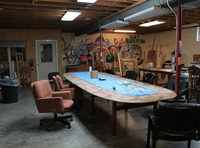
With generous grants from the Veale Foundation and the Eric and Jane Nord Family Fund, Hopewell recently completed a significant renovation of the farm’s Art Studio, located in the basement of Cottage Two. The renovation’s first phase included the installation of sheetrock, new drop ceilings, electrical work and improved lighting, and plumbing. A second phase saw the installation of new storage cabinetry, a paint booth, sink, painting, and the acquisition of equipment and supplies.

One aim of the renovation was to create discrete spaces within the existing art studio for specific art media work. The space now contains much-improved and separate stations for painting, sculpture, pottery, fiber arts, jewelry-making, and other creative arts. Funding was also used to acquire several pottery wheels to complement the program’s existing kiln equipment, making it possible to conduct pottery classes involving several residents at a time.

According to Hopewell’s art therapist, Mary Cassidy, “The objective of our art therapy program is to provide our residents with purposeful work that instructs, challenges, and provides a safe place for our residents to practice real world skills, including showing up on time, following instructions, working with others, problem solving, and risk-taking.”

“Over the past several years, the types of projects selected for our art crew wares have been intentionally chosen based on their therapeutic value – projects that are group oriented, environmentally friendly, skill-focused, and have a practical purpose,” Mary said. “Further, the projects for work crews are selected based on alignment with our holistic approach to treatment. It is important that our residents are given the opportunity to connect with the ‘why’ of creativity, and how it pertains to their personal healing journey, the benefit of our community, and the wider world,” Mary said.

CHANGES AT THE CRAFT MARKET

As a result of this evolving philosophy, and due to limited public traffic, the Hopewell Farm and Craft Market will remain open by appointment only. It will maintain its storefront presence for public access and to serve as an inventory and display space for the farm’s wares, including artwork, candles, pottery, textiles, maple syrup, and wood shop products. Hopewell staff and residents will expand the public presence of our art therapy program by participating in several community art and craft shows each year, and providing Hopewell products for sale at regional consignment shops.

In addition, profits made in sales from Hopewell products will be donated to outside mental health organizations and services, which the community (residents and staff ) will have an opportunity to submit for consideration and select together.

Mary explained, “The purpose of this is to strengthen our commitment to community as a healing force, and by paying it forward the work we do will go directly to help others who need the support. We believe we can extend the therapeutic value of our work by actively fostering such connections with the wider community.”

The community is planning a grand reopening of the Art Studio, and what Mary describes as an “art-activism show” in the fall to give residents a platform to share their personal experiences with mental illness and educate the public on their recovery journeys.

DONATE