Close

Who We Are

Strategic Plan

Board of Directors

Staff

Annual Reports

Overview

Transition Services

Sample Daily Schedule

Facilities Tour

Overview

Measuring Success

Success Stories

For Caregivers

For Professionals

Fees for Service

Apply

Corporate Partners

Planned Giving

Donate

Wishing Well

Exploring Mental Health 2025

Summer Solstice 2026

Residential Treatment vs Partial Hospitalization Programs: Which is Better for you?

By Nicole Holmes, LISW-S, Assistant Clinical Director, Clinician

When symptoms of a mental illness start to interfere with daily life, figuring out what level of care is needed can be challenging. Two common options for treatment include residential treatment and partial hospitalization programs (PHP). Both offer meaningful support, but they serve different purposes and knowing what is right can be confusing. For many individuals, especially those experiencing more complex or persistent symptoms, residential treatment can provide a stronger foundation for recovery. Understanding the difference between the two is the first step in being able to make an informed decision about what is right for you or your loved one.

What is Residential Treatment?

Residential treatment involves living full-time in a therapeutic setting with 24/7 support amongst others experiencing similar issues. This level of care is designed to provide structure, consistency, continual clinical oversight, and peer support. When someone is experiencing the symptoms of a major mental illness like schizophrenia, schizoaffective disorder, bipolar disorder, major depressive disorder, PTSD, or obsessive-compulsive disorder, all aspects of life can feel overwhelming and emotionally draining. Residential care offers a safe and accepting environment where routines can be established and therapeutic interventions can be delivered consistently throughout the day. This immersive setting reduces external stressors and allows individuals to fully focus on their recovery without the noise of outside life filtering in. Rather than trying to manage symptoms while navigating daily demands, clients can step into a space where healing is the primary focus.

What is a Partial Hospitalization Program?

 Partial hospitalization programs provide structured, intensive treatment during the day while allowing individuals to return home in the evenings. A PHP will often run for the majority of the day engaging individuals in group and individual therapy and can be a helpful option for those who are stable enough to function at home but still need significant support. A PHP offers the advantage of practicing skills in real-world environments. However, it also relies heavily on the individual to have insight into the need for treatment and to be able to maintain stability in their home life.

Why Residential Treatment Can Provide a Stronger Starting Point

 While both levels of care are important, residential treatment is often the more appropriate starting place when symptoms significantly impact functioning, insight is limited, or daily routines have broken down. Healing from serious mental health conditions often requires feeling support while engaging in daily activities in a structured manner over a long period of time. In a residential setting like Hopewell, therapeutic support is not limited to a few hours a day – it is woven into many aspects of daily living. Meals, activities, relationships, and routines all become part of the therapeutic community treatment process.

At Hopewell Therapeutic Community, we believe that healing happens through connection and meaningful work. Individuals are not isolated in their experience – they live alongside others who are also working toward recovery. Residential treatment, when done within a therapeutic community-based model, offers more than just stabilization. It provides opportunities to engage in purposeful activities, build relationships, create personal connections, and develop a sense of belonging within a supportive environment. This approach can be especially impactful for those struggling with how to cope with their mental illness, helping them rebuild confidence and a sense of identity beyond their diagnosis.

Both residential treatment and partial hospitalization play important roles in the continuum of care. But for many individuals, particularly those navigating complex conditions, residential treatment offers the depth, structure, and community needed to create meaningful and lasting change.


Founder’s Day, May 13, 2026

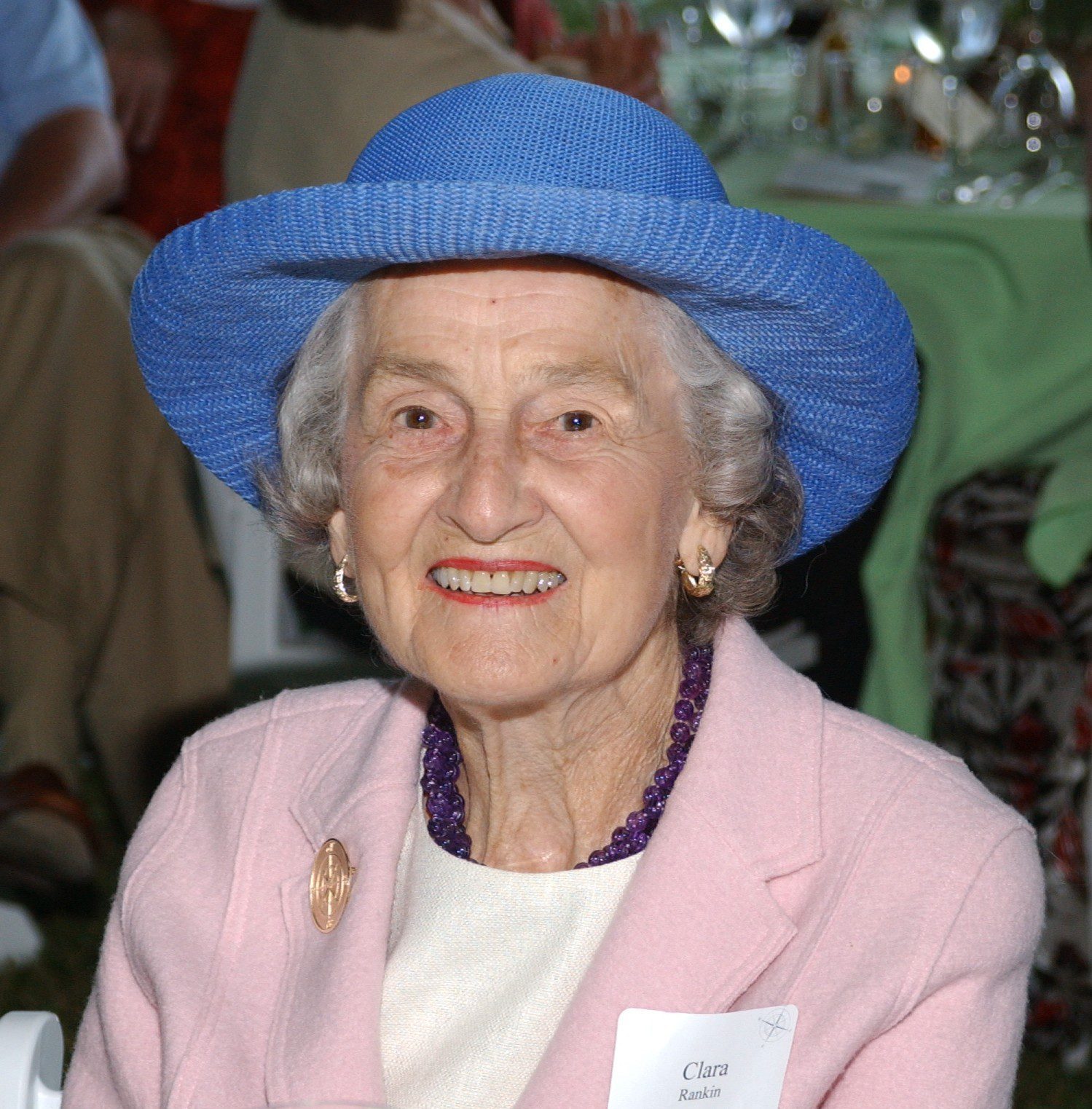
On May 13, 2026, we celebrate and honor the extraordinary life and enduring legacy of our founder, Clara T. Rankin, on her birthday. A native Clevelander, Clara was known for her leadership roles and lifelong philanthropic support of many organizations in Northeast Ohio. In her seventies, she saw the need for a therapeutic farm for adults with mental illness near Cleveland, and this became her passion.

For Clara, Hopewell was truly a labor of love. In 1993 she assembled a Board of Directors, secured initial funding, found a 325-acre working farm, hired an executive director, and together they went to work developing clinical programs and hiring staff. Under Clara’s dedicated leadership, her vision became reality.

Clara’s clear mission was to provide an opportunity for adults with serious mental illness to experience a self-reliant and satisfying life through participation in a vibrant residential therapeutic community. Her unwavering belief in the role that nature and meaningful work play in mental health recovery and her tireless efforts shaped this organization into what it is today.

Hopewell opened its doors to the first resident in 1996. Since then, we have welcomed adults with mental illness from across the United States and abroad. Clara remained actively engaged in fundraising, making connections, and spreading the word about Hopewell until age 107, her spirit of advocacy never waning.

On Founder’s Day, we remember Clara Rankin for her sharp mind, prodigious memory, profound empathy, her generosity, and leadership. She inspired so many to care about people suffering with mental illness, who are often stigmatized or invisible. She left a legacy that inspires our commitment to mental health recovery every single day.

In her legacy, on Founder’s Day, we will award an employee who exemplifies the characteristics that made Clara such an inspirational – and aspirational – role model with the Clara T. Rankin Award. The first winner of the Clara T. Rankin Award is Anne Skowronski. Ann has worked at Hopewell for almost 30 years and embodies the core values of our therapeutic farm and Clara’s spirit through her passionate commitment to our residents and our program.

Thank you, Anne, for your service to Hopewell. We are better because of you.

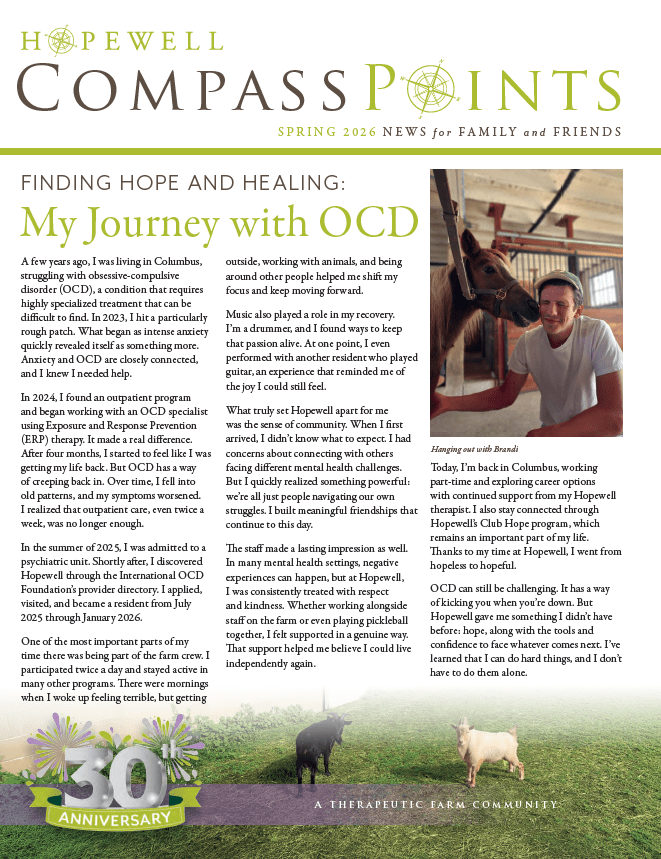
Spring 2026 Newsletter

Spring has arrived with outside activities, our visiting artist program, Hopewell’s newest board member, and a story about Hopewell’s outstanding OCD program.

DONATE