Close

Who We Are

Strategic Plan

Board of Directors

Staff

Annual Reports

Overview

Transition Services

Sample Daily Schedule

Facilities Tour

Overview

Measuring Success

Success Stories

For Caregivers

For Professionals

Fees for Service

Apply

Corporate Partners

Planned Giving

Donate

Wishing Well

Exploring Mental Health

Summer Solstice 2026

Phyllis Vine to Speak at Exploring Mental Health

Phyllis Vine is the author of Fighting for Recovery, An Activists’ History of Mental Health Reform and President of the Board of Directors of Gould Farm in Massachusetts. She will speak at Hopewell’s Exploring Mental Health Series on October 6, at 5:30. The event is being held at Glidden House in University Circle (Cleveland) and will also be zoomed. Visit here for more information.

In Fighting for Recovery, Phyllis Vine reveals how grassroots activists confronted medical authority, entrenched politicians, and the stigma associated with a psychiatric diagnosis while they built alternatives to replace stagnant services. Pointing to their own lived experiences, which included success, achievement, and opportunities, they spread hope through their example. Among the new models of peer services, crisis services, and community support, people with lived experience have opened doors to wellness and well-being.

Phyllis Vine has focused on advocacy, writing and reporting about mental illness throughout her career. With a master’s degree in public health, she taught the history of health care for over two decades to graduate students studying health advocacy. In addition to Fighting for Recovery, she has published three previous books, including Families in Pain, which describes the experiences of families seeking a better life for relatives with mental illness. Her work has appeared in many diverse peer-reviewed journals.

This is a great book for:
A friend or family member of someone with serious psychiatric diagnoses, to understand the history of mental health reform.
A person struggling with their own diagnoses, to learn how other patients have advocated for themselves.
An activist in the peer-services network: social workers, psychologists, and peer counselors, to advocate for change in the treatment of psychiatric patients at the institutional and individual levels.
A policy maker, clinical psychologist, psychiatric resident, or scholar who wants to become familiar with the social histories of mental illness.
PBS ideastream Hopewell video

The program features:

  • Highlights of the therapeutic farm community
  • How Hopewell came to be through a conversation with founder Clara Rankin
  • Comments from current and former residents about their experiences, and how Hopewell contributes to their well-being and independence
  • How Hopewell is working to eliminate the stigma of mental illness and promote the integration of those with mental illness in our community

Hopewell Creates a Community, Offers Growth for Mentally Ill

Reporter Ginger Christ and photographer Gus Chan from the Cleveland Plain Dealer and Cleveland.com visited Hopewell in June. The article (and stunning photographs) that came from their visit is here.

Ginger Christ’s story begins:

“GPS won’t take you all the way to Hopewell Farm. It guides you most of the way but, for the final stretch, you’re on your own.

“The same is true of the farm itself. Designed as a farm-based residential treatment facility for those with severe mental illnesses such as schizophrenia, schizoaffective disorder, bipolar disorder and major depression, Hopewell aims to give its patients the skills they need to live as independently as possible after they leave.“

The goal, Clinical Director Daniel B. Horne says, is for patients to “have a life they didn’t have before.”

To read the rest, see this.

Hopewell to Construct New Activity Center

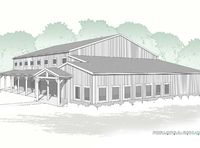
This spring, with support from generous philanthropists, Hopewell will break ground on an exciting addition to the farm – a multipurpose activity center. This brand-new facility will provide nearly 6,500 square feet of indoor space for Hopewell residents and staff to congregate, exercise and enjoy a wide variety of group recreation and other activities.

The facility is part of a campus-wide master plan originally conceived and designed by Paul Westlake, Jr., principal architect with the internationally-renowned firm of DLR Group/Westlake Reed Leskosky. With Mr. Westlake’s approval, Medina-based architect Theodore G. Manfrass was commissioned to design the activity center. The Mullett Company, a general contractor based in Newbury, will oversee the building’s construction.

The activity center will be the first new major addition to the Hopewell campus since the dedication of the Sugar House in 2014. Current plans call for a groundbreaking in early Spring 2019, with completion and an official dedication to take place in the autumn.

The building will be dedicated as “The Richard J. Swadey Activity Center,” in memory of a longtime resident of Hopewell. The building is largely funded by a charitable remainder trust left by Richard’s father, Robert J. Swadey, a native of Cleveland and Chagrin Falls who was the former chairman of Midland Title Security, Inc. Additional lead funding for the Swadey Activity Center comes from longtime supporter Suzanne Morgan, a member of the Hopewell Council of Advisors, and gifts made by Eaton Corporation and members of the Hopewell Board of Directors.

The Swadey Activity Center will feature:

• A gymnasium floor with a half-court basketball court

• A meeting room with a flexible room partition allowing the room to be divided into two rooms for separate group activities

• A fitness center to include workout equipment

• Restrooms, a utility closet and a small staff office

The new center will replace Hopewell’s existing outdoor basketball court, and will provide year-round facilities for recreation, as well as a dedicated indoor space that can accommodate gatherings of the entire Hopewell community for activities such as music and live performances, movie nights, dances, basketball, volleyball and other athletic and exercise activities.

Art Studio Gets a Makeover

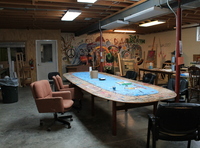
With generous grants from the Veale Foundation and the Eric and Jane Nord Family Fund, Hopewell recently completed a significant renovation of the farm’s Art Studio, located in the basement of Cottage Two. The renovation’s first phase included the installation of sheetrock, new drop ceilings, electrical work and improved lighting, and plumbing. A second phase saw the installation of new storage cabinetry, a paint booth, sink, painting, and the acquisition of equipment and supplies.

One aim of the renovation was to create discrete spaces within the existing art studio for specific art media work. The space now contains much-improved and separate stations for painting, sculpture, pottery, fiber arts, jewelry-making, and other creative arts. Funding was also used to acquire several pottery wheels to complement the program’s existing kiln equipment, making it possible to conduct pottery classes involving several residents at a time.

According to Hopewell’s art therapist, Mary Cassidy, “The objective of our art therapy program is to provide our residents with purposeful work that instructs, challenges, and provides a safe place for our residents to practice real world skills, including showing up on time, following instructions, working with others, problem solving, and risk-taking.”

“Over the past several years, the types of projects selected for our art crew wares have been intentionally chosen based on their therapeutic value – projects that are group oriented, environmentally friendly, skill-focused, and have a practical purpose,” Mary said. “Further, the projects for work crews are selected based on alignment with our holistic approach to treatment. It is important that our residents are given the opportunity to connect with the ‘why’ of creativity, and how it pertains to their personal healing journey, the benefit of our community, and the wider world,” Mary said.

CHANGES AT THE CRAFT MARKET

As a result of this evolving philosophy, and due to limited public traffic, the Hopewell Farm and Craft Market will remain open by appointment only. It will maintain its storefront presence for public access and to serve as an inventory and display space for the farm’s wares, including artwork, candles, pottery, textiles, maple syrup, and wood shop products. Hopewell staff and residents will expand the public presence of our art therapy program by participating in several community art and craft shows each year, and providing Hopewell products for sale at regional consignment shops.

In addition, profits made in sales from Hopewell products will be donated to outside mental health organizations and services, which the community (residents and staff ) will have an opportunity to submit for consideration and select together.

Mary explained, “The purpose of this is to strengthen our commitment to community as a healing force, and by paying it forward the work we do will go directly to help others who need the support. We believe we can extend the therapeutic value of our work by actively fostering such connections with the wider community.”

The community is planning a grand reopening of the Art Studio, and what Mary describes as an “art-activism show” in the fall to give residents a platform to share their personal experiences with mental illness and educate the public on their recovery journeys.

Crisis Intervention Team Training

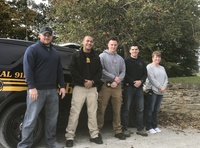
Crisis Intervention Team Training The Trumbull County Mental Health and Recovery Board (TCMHRB) and the Ohio Chapter of the National Alliance on Mental Illness sponsored Crisis Intervention Team (CIT) training for 21 law enforcement officers in early October. Candace Carlton, our Quality Improvement and Compliance Director, and John Myers, CIT Program Coordinator, arranged for four deputies who cover our jurisdiction to visit Hopewell as part of their training.

CIT programs educate law enforcement about local resources, treatment, and supportive services for people experiencing mental health crises. Trainees learn about helping people with mental illness, addiction, and developmental disabilities, and learn and practice skills needed to de-escalate different situations. According to Mr. Myers, “Research has established CIT’s effectiveness in developing better understanding of mental illness, improved crisis response, increased jail diversion, increased continuity with treatment providers in the community, and improved safety for officers as well as the persons they are called upon to deal with, and the larger community.”

Hopewell staff have been thoroughly trained in CIT responses, including verbal de-escalation. Candace explained, “When someone is in crisis, our policy is not to physically restrain residents unless someone’s life is in danger. If a resident is not responding to staff intervention, we follow established protocols and call for law enforcement when necessary. We must keep the other residents and staff safe.”

After an incident, staff members debrief the witnesses and anyone else involved. Candace said, “Some residents have had previous negative experiences with the police and we encourage them to process their feelings. We have observed that when a CIT trained deputy is involved, the aftermath is less traumatic for everyone.”

The site visit was a win-win situation for everyone. Of the four visitors, only one had been to Hopewell in the past. Candace explained our treatment approach and the population we serve, and took the deputies on a tour of the farm to familiarize them with our facilities. “The deputies now know what to expect when they respond to a call from Hopewell,” said Candace. “More importantly, when we ask for a CIT trained deputy, we know that residents will be treated with compassion and respect.

Our Team, Our Passions

Meet Matt Kalas, Hopewell’s new farm manager, who joined our staff in August. You could say that farming is in his blood.

“I grew up on a dairy farm with 125 cows in North Bloomfield,” said Matt. “Now that my dad has retired from farming, my two brothers and I grow corn, soy, and wheat. We’ve got 300 acres, about half of which is used for hunting and fishing.”

After 22 years at KraftMaid, Matt was looking for a change and a new challenge. He has immersed himself in learning all aspects of the farm and the Hopewell community. As part of the treatment program, resident work crews assume the major responsibilities for daily operations. “What’s new for me is putting the residents’ needs at the forefront of decision making. If they don’t benefit from something we’re doing on the farm, we may have to do things differently. We really want residents to be more involved in work crews, but the most important thing is to enjoy what they’re doing.”

He continued, “We have made some changes to make it easier for residents to participate. We had a small flock of sheep – the lambs are cute but as sheep mature they tend to avoid people. We sold the sheep and purchased some miniature goats and residents love them! We have traditionally used draft horses to help with farm work but we no longer have enough work for them to stay healthy. Residents were afraid of them because they are so big. We found new homes for the draft horses and are bringing in smaller horses or ponies, which will be easier for residents to work with. The pigs have moved to the barn and the residents are finding them easier to deal with.”

Residents enjoy working with baby animals, but they know that they are not pets. Some are raised for food, such as our Belted Galloway cows, which have been iconic at Hopewell. According to Matt, Belted Galloway are slow to mature and their meat is not as flavorful. Over time we will substitute Angus beef cattle to provide better quality meat.

Matt also oversees the gardens, which provide produce for the Hopewell kitchen. Residents enjoy working together in the gardens, harvesting and using the vegetables. Expanded gardens and more types of produce are planned for the spring.

Maple sugaring, a favorite winter activity, will continue. “We have a great sugar house and we will still produce Hopewell’s famous maple syrup, just on a smaller scale. It will be for sale to the public at the Hopewell Farm and Craft Market,” said Matt.

Matt is very pleased that he joined the Hopewell staff. “All day, I get to do what I love – farming – and working with residents is new for me. I am impressed with how they want to learn and how much they enjoy working as a team.” At the end of a long hard day, you would think it’s time for a nap, but not for Matt. He goes home to his family, second job and first love. . . working on his family farm.

Thanks, Matt, for joining our team and brining your passion and inspiration to Hopewell.

Community Service for Those Who Serve Our Country

Community service offers so many wonderful life experiences, not to mention it helps us to feel like we are “giving back.” Here at Hopewell, we respect those moments when we have an opportunity to keep our residents focused on the positive. We believe we can make the world a better place for those in our community.

In the past, Hopewell residents and staff have participated in clean-up day in the local park and served food at the annual area ox roast. We have walked dogs at Rescue Village and helped with landscaping for the Geauga Humane Society. And we have washed trucks for the Mesopotamia Volunteer Fire Department (where one of our residents is an active member).

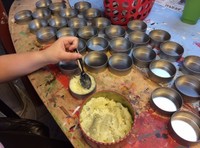
Recently, one of the projects in the Art Room was making “sugar scrub” for sale in our Farm & Craft Market. (We even incorporate the lemon balm grown in our gardens into this special facial cleansing product.) As we worked together making the lemon-scented mixture, the residents and I talked about the individuals serving in our country’s armed forces. We came up with the idea to send our sugar scrub to the active duty female sailors serving in the Middle East. One hundred four-ounce jars of Hopewell Sugar Scrub were received by the women aboard the United States Navy’s U.S.S. Howard. They were loved by all and more have been requested by both women and men.

The sailors would be grateful to receive mail. Please send letter and cards to: USS Howard DDG, Unit 100191, Box 1501, FP, AP 96667. Thank you!

Written by: Cindy Wagner. She has been a Program Facilitator at Hopewell for ten years. She is the work crew leader for the Art Room Crew and the Garden Crew. Her son, Austin Wagner, currently is deployed in the Middle East, serving on the U.S.S. Howard. (Note: Rick Polch, Hopewell’s Superintendent of Buildings & Grounds, has a son serving in the U.S. Air Force.)

Hopewell in the Community

In high school and college, students often earn service hours when they donate their time and talent to serve their community. At Hopewell, this commitment to service is very similar. Hopewell residents dedicate themselves both to helping each other and serving the local communities.

Our resident community outreach program offers a broad array of opportunities.

Church/Religious Activities. Hopewell residents help local churches and congregations whether or not they personally are a part of the specific religious denomination needing help. As one resident put it, we want to help people no matter who they are.

Volunteerism. Candace Carlton, Hopewell’s Quality Improvement and Compliance Director can be contacted when the community calls for help.

Amish Neighbors. The wonderful Ohio area where Hopewell lives keeps us in close contact with our warm and caring Amish neighbors. We all are good neighbors here to help each other whenever we can.

Music. The wonderfully talented residents who come to Hopewell bring their music. We have beautiful voices, emotive instrumentalists and song that echo through our halls. This music is shared with concerts at the farm and during the year off-campus.

Art and Craft Shows. Hopewell not only offers crafts at its Farm & Craft Market, it lets residents produce amazing art that can be used to support fund-raisers in our nearby communities. Communities have come to enjoy access to the market. There, numerous crafts and farm produce are available for purchase at a very good price. Even the famous Hopewell maple syrup can be found on display.

With mental illness, creative talent often finds expression at Hopewell. We provide a safe and caring-environment where our residents can spread their wings. These talents and a desire to serve the community bring Hopewell closer to our neighbors in every direction.

Full Circle: Betty Ruth Shear

Growing up, friends came easily. I was a lucky enough to me smart and popular, the future was wide open. My dream to become a doctor was getting closer to becoming my reality, until everything began to spiral out of control. Suddenly, periods of euphoria and unbridled creativity were interrupted by sinister obsessions, suffocating panic and repeated visits to the depths of despair—as well as to a laundry list of mental health institutions. I have been to the dark side, I feared I would lose everything that was the hell of my mind.

Forty years after my bipolar diagnosis I have found my way. I became a world traveler, Certified Public Accountant, and a beloved aunt. Happiness has not come without struggle. I have fought public delusions and a deliberate head-on car crash. My life had become a gonzo ride into madness. Metal illness warped my logic and the world around me. Honest reality came in short, almost poetic streams of consciousness.

I had family tell me they were afraid when I decided to pen the story of my life in my biography. Afraid that the past I fought so hard against would overcome me. But I knew that I had to take the chance, if even for one person it would be someone else hope. I know there are people out there looking for someone or something they can relate to, I had to try to reach them. Maybe if I had a book like mine it would have helped me on my journey. I couldn’t pass up on that chance to help someone else.

For a very long time, the stigma of mental illness stopped me for seeking the help I needed. If I was sick with strep throat I went to the doctor, took my medication and healed. For me, a diagnosis of bipolar was completely different. There was my emotional pain, but there was also fear. I didn’t want to be labeled and locked away.

I know now that this is not the case, that a mental illness is just an illness. Struggling with mental illness is no different than any other struggle in life. With the support of my family, close friends and a trusted psychiatrist I have brought my life full circle. If you know someone who is need of understanding and is fighting mental illness please consider picking up “Full Circle My Success Story Living with Bipolar Disease

I had the opportunity to visit Hopewell and share part of my journey with the residents. The residents and staff at Hopewell were so kind and welcoming. Many came up to me after my talk, asked me questions and told me about themselves. Hopewell is a wonderful setting for a person with mental illness to reconnect with life. The Hopewell staff were so warm and genuinely willing to help those afflicted with mental illness.

DONATE