Close

Who We Are

Strategic Plan

Board of Directors

Staff

Annual Reports

Overview

Transition Services

Sample Daily Schedule

Facilities Tour

Overview

Measuring Success

Success Stories

For Caregivers

For Professionals

Fees for Service

Apply

Corporate Partners

Planned Giving

Donate

Wishing Well

Exploring Mental Health

Summer Solstice 2026

Meet Dr. Andrew Hunt

“I see us as keepers of hope, and I never give up on improving a situation. The ideal outcome is to find the right regimen of medicine, and the person starts to grow again in their recovery.” – Dr. Andrew Hunt

Dr. Andrew Hunt trained and continued his career as faculty at University Hospitals/Case Western Reserve University. Now he trains resident psychiatrists the Associate Program Director of General Psychiatry Program. He also directs a transitional-aged youth (TAY) clinic for clients between 17 and 29 years old, and he sees adult clients at the Center for Families and Children, a community mental health center in Cleveland.

Dr. Hunt joined the staff at Hopewell when our previous consulting psychiatrist retired in 2024. His role comprises medication management, diagnosis, following our residents, monitoring physical health and side effects, and other medical concerns. He attends weekly meetings with clinicians where they discuss observations during the past week. Between visits, Hopewell nurses communicate with him about new concerns, and medication adjustments are made under his supervision.

One of Dr. Hunt’s fundamental concerns is the problem of human suffering, wrestling with freedom and responsibility, and a sense of meaning. “Psychiatry is the one field of medicine where you work directly with suffering and try to alleviate it,” he said. “I always thought that I would gravitate toward mental health because I am more interested in the mind and the brain. I’m also intrigued by the humanities and philosophy, and the experience of being human.”

He added, “In primary care, your goal is more typically prescribing and referral. Talking to patients becomes a more secondary goal. For me, talking to patients was the first thing. I am more concerned about the long-term outcome. I want to hear the story and get to know the person, then decide what to do with the medicine.”

Working at Hopewell is extremely rewarding for Dr. Hunt. “My favorite part is seeing people recover. I have heard parents say, ‘We have our daughter back.’” He continued, “In other cases where there is not an ideal medical outcome, we can adapt the environment to give residents a more stable lifestyle.”

Dr. Hunt commented, “It has been a fantastic opportunity to work at Hopewell, to do my best work in an environment with committed clinicians who are very smart and very savvy. They genuinely care about all the clients. They are the keepers of hope for everyone here.”

In addition to working at Hopewell, Dr. Hunt appreciates opportunities to explore the grounds, participate in karaoke with staff and residents (a favorite activity), and he even played in a pickleball tournament this summer. He also dreams of innovating the oboe as a solo instrument in the alternative rock genre.

Fun fact: Dr. Hunt has been writing several works of science fiction, one set 100 years in the future, and another that features Sasquatch. He enjoys visiting natural places such as Joshua Tree, Mt. Rainier, the Oregon coast, and the Blue Ridge Mountains.

Thank you, Dr. Hunt, for everything you do for Hopewell!

Meet Annie Boyle, LPC

Anne Boyle has been with Hopewell since 2022. She holds a Master’s Degree in Clinical Mental Health Counseling from Kent State University. At an organization with several Anns and Annes, she is known as Annie B.

Prior to Hopewell, Annie B. worked for a community based mental health organization providing in-home therapy and case management for adults in Cleveland. She was intrigued when a position opened at Hopewell. “I wanted to work where a higher level of care was needed for severe and chronic mental health issues and I fell in love with Hopewell’s approach to residential treatment,” she said.

”Hopewell is so different from what I learned about residential care in graduate school. We see a resident as a whole person, not a problem to solve in a few days or weeks before discharge. A minimum 4-6 months stay at Hopewell allows for a timeline to address issues that affect a resident’s health and wellbeing. We help them identify what they find meaningful, discover multiple facets for managing their illness, and build a wellness kit with skills that allow them to manage life’s stressors and maintain overall wellbeing and health,” she stated.

Different Approaches to Treatment

“Primarily I use three approaches with residents. Exposure and Response Prevention (ERP) is primarily for Obsessive-Compulsive Disorder (OCD) and most forms of avoidance. Cognitive Behavior Therapy (CBT) is for cognitive restructuring and reframing maladaptive thinking patterns, specifically for someone whose baseline anxiety is high. Acceptance and Commitment Therapy (ACT) is for someone who struggles with accepting the discomfort of life. We also do a lot of work exploring values,” Annie explained.

“What we understand to be profound and meaningful change is not the social standard. Little steps mean a lot. Perhaps it is a resident moving to a slightly less supportive living environment. Someone who moves from Hopewell to the Cleveland Transition Program, where I spend a great deal of time, receives Hopewell support while living more independently. Maybe this person takes everything they have learned and apply it in a lower level of care. Maybe they will get a part-time job. Maybe they will go home and manage their ups and downs. I am deeply moved when I see them advocate for themselves.”

Working With Families

Another part of Annie’s job is working with families to the extent that the resident allows. “I advocate for the resident as I help a family understand what they feel is going on, especially when they struggle to communicate. Even if the residents do not want us to share personal health information (which is their right), I can connect families to resources to deepen their comprehension of the situation and provide support. My approach is more psychoeducation as opposed to family therapy.”

As part of their treatment, staff look at a resident’s support system to determine what they need when they leave Hopewell. For some, wellbeing will include living independently and working, while others will be discharged to a group home or a family environment. Annie stated, “When working with a family, I explain the anticipated prognosis and create a plan for warning signs of decompensation instead of waiting for a crisis.”

What motivates you to work with people with mental illness?

“Having been in my career for four years, what drives me is knowing that I can play a role in someone feeling safe and finding motivation to move forward despite real challenges. I am also very interested in human psychology. There can be hard days and weeks when you work with this population. I learned in graduate school that with traditional therapy, you should see progress at X number of weeks, a model that does not look the same in a residential setting. Instead, you want your client to get to the place that they want to be.”

Life at Home and Future Plans

Annie has two dogs, ages 4 and 8. She said, “If I have a difficult day at work, we emotionally regulate together. I do a lot of home improvement projects on an Amish home with 3 acres that I bought with no electricity, heating, or cooling. I value having a support system so a house with a huge kitchen and deck allows us to hang out together. I enjoy using my hands and I do a lot of yard work. Breaking down a wall or making an art piece are great stress relievers.”

Annie’s longer-term plans include gaining her independent social work licensure. She is also pursuing continuing education about OCD, which she is very passionate about. This summer, she plans to go to Gatlinburg with her friends and family – a welcome period of rest and relaxation.

Thank you, Annie B., for everything you do for Hopewell!
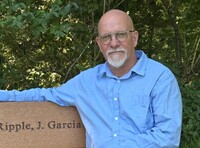
Meet Allison Dunkerton

Allison Dunkerton, Hopewell’s new finance manager holds a BS in Accounting from the University of Akron.

Before she came to Hopewell in March of this year, Allison helped run her family’s small businesses for seven years. Previously she was an auditor at a large CPA firm. “I hate math,” Allison joked, “but I like the problem solving of accounting and finance.”

“At Hopewell, I have a lot of interaction with prospective and current families. I make sure that they understand all of the financial aspects of having a loved one here,” she said. “I walk them through their financial obligations and our billing system. If they request, I set up a Bank of Hopewell account for the resident so they can independently get cash for trips and personal expenses,” she explained.

Allison also works closely with the Board of Directors, prepares monthly financial statements, and keeps abreast of current capital projects and expenses, investments, the budget, and the endowment. She staffs the finance, investment, and development committees.

Meeting with residents is part of Allison’s portfolio. She elaborated, “When a resident is ready to transition to a more independent living situation, I meet with them to help prepare a budget and discuss money management skills. I’m also accessible to residents for questions about money or paying bills.”

Finding Fulfillment

“I was very much drawn to Hopewell because I was looking for a place to settle down long-term in terms of a career and I wanted to land at an impactful, meaningful place to work – a place with a mission. Finding that type of organization is not an everyday occurrence in the financial world. Hopewell stuck out to me when I was doing a job search,” she said.

“The other day, my husband said to me, ‘Do you realize how much happier you are since you started this job?’ He’s right. A lot of it is the people who make the difference. I was ‘the boss’ at my last job and it was very isolating. I love the sense of community at Hopewell. I enjoy having lunch with residents and staff and I like to walk the grounds,” Allison shared.

Allison and her family have chickens and acreage where she enjoys riding electric dirt bikes with her sons. “I try not to annoy my neighbors too much (even though one of them is my mom)” she smiled. “A farm was never my aspiration, but it turns out I like it. The fact I can see cows from my office was whole-heartedly a part of my decision to work here! In fact, I am trying to convince my mother to share a cow.” Another strong interest is traveling. A recent visit to Yosemite National Park with the family was a highlight of their year and they are planning a hiking trip in the Badlands of South Dakota.”

She continued, “I feel fulfilled by life right now. I feel like I have it all in a weird way,” she continued. Except for that cow. Gotta get that cow!

Meet Daniel Horne, LPCC-S

I started as the Clinical Manager at Hopewell in 2011. I have a bachelor’s degree in social work from the University of Montana and a master’s degree in community counseling from Youngstown State University. I have worked in the fields of social work and counseling since 1985, and have held a wide variety of positions, from working at a pre-release center for the state prison in Montana, to residential programs for behavioral teenagers in Maine, to residential programs for adults with severe and persistent mental illness in Ohio, as well as working for a large county board of developmental disabilities.

Deciding to go to the University of Montana ended up pointing me in a career direction that I did not predict. I was a forestry major for two and a half years and realized it just really wasn’t right for me, even though I enjoyed it. I looked at other majors, held a conversation with the dean of the School of Social Work and it immediately felt right for me. That was significant in changing my career path and life path, where I lived, and who I worked with over the years.

I particularly enjoy working with the population at Hopewell: adults struggling with severe and persistent mental illness, for lots of reasons. In this field, and at Hopewell in particular, I’m motivated by seeing healing happen. People improve. People improve their functioning levels and their satisfaction with life levels. To help guide that process is very rewarding.

I’m on the Leadership Team and I have a small caseload of two to five residents. I am mostly involved in supervising eight clinicians individually on a weekly basis and twice a week as a group. I run the weekly clinical team with the psychiatrist, our psychiatric nurse practitioner, the clinicians, nurses and the admission/outreach team. It’s a collaborative process to give them what they need, as each person has a different approach to working with residents.

My work at the farm is pretty diverse. I first and foremost oversee the clinical program, so I think of myself as having my own caseload of clinicians. We talk through cases, struggles, and successes, so I feel like I indirectly have a hand in the care that all of the residents receive. I am often called upon to intervene in crisis situations, which is a necessary part of the work we do here at Hopewell. I think I bring a calmness and level of tranquility to those situations that helps to bring them to resolutions that are good for both Hopewell and the individual who’s in crisis.

The work I (and all of us) do at Hopewell is meaningful work in that it changes lives, and those changed lives then improve life out in the world in immeasurable ways. One of our former residents that I worked with significantly while he was here recently graduated from law school and passed the bar, which was not an easy accomplishment for him. The work that he put in at Hopewell – and our ability to create a place that allowed that work to be done – has produced a lawyer that’s going to go out in the world and do good things. This means a lot to me, and that’s just one story of many, many stories that Hopewell makes possible.

On another note, it feels good to be important in the lives of residents, parents, and staff. Supervising is important to me – creating the opportunity for staff to become excellent clinicians who are important to the people they serve. When I am important to a small group of people here, that impacts so many other people, it’s like the ripples spreading out over a pond from a single pebble tossed in.

There are so many good days at the farm. I just interviewed several clinicians for a new position at Hopewell, and one of the things I made a point of telling them is that there are hard days here. We work with a complicated population. In between the tough times, though, there are so many glorious, elegant moments. When you see two people that were struggling a day ago, and they’re out walking together around the track in the sunshine, or you go out in the woods with them and slosh through the snow and collect maple sap for our maple sugaring, it all just feels so good. We’re working side by side with them to accomplish the day-in, day-out tasks of a working farm. In doing that, there are just so many magical moments that it’s hard to describe.

In addition to my work at Hopewell, I am an artist. My primary medium is creating kinetic steel sculptures that rely on balance and human interaction with each piece. I received a welding torch for my 40th birthday, mostly to fix things, but quickly gravitated towards developing sculptures. I have traveled over much of the United States to participate in juried fine art shows; however, I have scaled back quite a bit. At one time I was doing 15 shows a year, and now I do three or four shows a year.

When I came to the farm fourteen years ago to interview with the executive director, I told him that I had done a lot of different jobs, but that I hoped that I might find a place that I could stay and finish out my career. Here I am 14+ years later, and I still feel that way. I have no plans to go anywhere. If I’m allowed to, I will continue to work at Hopewell until I retire. I might end up working until I’m 70, so that would give me another eight years. My future goals are to stay at Hopewell, do good work with residents, be as supportive of the clinical team and the entire Hopewell community as I can be, and keep creating art and enjoying life.

On a personal note, I would love to travel to places like Turkey, Ireland and points beyond with Jenn, my partner. Artistically, I’ll strive to create works that exceed my past efforts at developing elegance and wonder in my sculptures.

Meet Kala Mansfield

Meet Kala Mansfield, LPC, ATR-P, who joined the Hopewell staff in 2023 as an intern.She was hired as a clinician in May 2024 when she graduated from Ursuline College with her Master’s in Counseling and Art Therapy.

Kala runs the ceramics room, meets with residents for individual therapy sessions and runs the Acceptance and Commitment Therapy (ACT) Art Therapy group. She is also a program facilitator two days per week, runs a weekly Dungeons & Dragons game for residents, and holds a lot of open studio hours.

Art Therapy at Hopewell

For her Master’s thesis, Kala applied Acceptance and Commitment therapy principles (cognitive diffusion, acceptance, values, committed actions, the self as context) and created art activities. It was so successful that she is still running the group today. Some of the activities are physically engaging and some are more a reminder of what you are learning. She explained, “For example, this week we are working on separating from our struggles and gaining new perspectives. Residents were asked to draw something that bothers them, then ripped it up and glued it back together in a collage.”

“Art therapy can be structured many different ways depending on the needs of the residents,” she said. “It really is personalized. Sometimes we have a therapy session and make art together at the same time. The art is grounding and distracting – something to focus on instead of just an emotionally difficult discussion. Sometimes art sessions are educational and I teach life skills such as sewing. You feel more independent when you can sew something functional, and it gives a sense of accomplishment. Other times art is for emotional expression: you don’t have to think, just pour your emotions into the art, then we discuss the art that was created.”

Open studio time is very popular – residents come to the studio for free expressive time. “Working on a project in a group helps with social interaction. People work together and ask for advice and suggestions. It’s a good day when I feel like the art therapy groups were impactful and successful.”

Time for Travel. . . Time for Art

Other than making art and jewelry, Kala’s main hobby is travel. While an undergraduate at Miami University, she lived with a host family and studied in Luxemburg, which afforded her the opportunity to travel throughout France, Italy, and Germany. Graduate school included trips to South Africa and Nepal where she volunteered with United Planet. In South Africa, Kala worked in township schools in disadvantaged community making art with kids who didn’t speak English. In Nepal, she worked with foster kids whose parents were incarcerated.

Kala remembered, “Nepal has a significant part of my heart! I was told by multiple people that they expect to see me again. People are wonderful. They have a karmic culture which inspires them to do good things in this lifetime while looking towards the next. They believe that actions have consequences beyond the immediate future. I took what they call a ‘nice hike’ up Champa Devi, the third tallest hill in the Katmandu Valley in the foothills of the Himalayas. It was an exhausting and exhilarating afternoon.”

Art has always been part of Kala’s life and she expresses herself in many different media. In high school, she painted with watercolors and did graphite drawings. College led her into jewelry making and metalwork. More recently she has gotten into textile art and embroidery.

As far as the future is concerned, Kala said, “I am only a year outside of graduate school and I’m still adjusting to life without homework and with evenings free. Traveling is on my list, specifically to Ireland and to go hiking in Utah. I make a lot of art and wire jewelry. A big goal would be to build a garage workshop. I also just bought my first house and I’m slowly transitioning.”

Thank you, Kala, for everything you do for Hopewell!
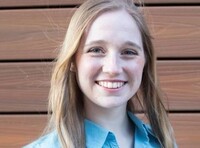
Meet Sami Petty, Consulting Nurse Practitioner

I graduated from Malone University in 2011 with my BSN and passed the boards that year. My first job was at South Pointe, Cleveland Clinic on an observation unit.

Fun fact, I went to work at a camp in Pennsylvania for a summer as a lakefront director. It was there that mental health was presented to me as an interest. Many of the staff struggled with mental health. They felt safe coming to talk with me. I felt the Lord really lay on my heart that talking about mental health, and helping others through their difficulties, was a gift that I have, and I should pursue that career. I searched psychiatric nurse positions back in Cleveland and found Windsor Laurelwood Hospital.

I worked at Laurelwood for almost 5 years as a psychiatric nurse with kids from 5-18 years old. After two years I discovered that becoming a psychiatric nurse practitioner was a career path so I studied at Case Western Reserve University. In my studies, I started to develop certain beliefs with treating psychiatry. I believed in a holistic approach and that medication was not the only way to treat mental illness. I started working at Hopewell as a program facilitator with the hope of working here as a nurse practitioner one day.

In 2018, I started working at University Hospital in the outpatient child and adolescent psychiatry division. I saw mostly teens and young adults, diagnosing, prescribing and providing some psychotherapy. I was able to integrate working at Hopewell twice a month.

Within the last year I started teaching full time at Case Western Reserve University. I teach 3 classes in the BSN program: Wellness, Psychiatric Mental Health Nursing, and Teaching and Learning in the Community.

A Bit About Me Personally

I really love music and sports. My favorite instruments are piano and guitar and I play in the worship band with my husband at church. They are a good outlet and way of expression for me. I played soccer for one year at the college level. I love the Cleveland Browns… most of the time. We have a pickleball court in our driveway and really try every and any sport we can. I used to be a triathlete – I raced for 6 years and loved it. Now I would say that my two young sons are my hobby!

I love writing, creating, filming, and editing. Currently, I am trying to start a podcast with a friend about mental health and mindset. I also enjoy speaking in front of others. I’m consistently looking for opportunities to speak on meaningful topics to help others in their learning process.

Truthfully, my faith is my foundation. It holds me together and provides a path forward. Without a doubt, God has called me to this work. Looking back, I can see He’s been orchestrating everything to bring me to where I am today. This is my platform and how I’m to connect and love others well.

I realize that I can’t fix everyone with a mental illness. But I’m going to do the best I can to be there, support them, and help them manage their symptoms. Mental illness doesn’t have a formula. Yes, there are a group of symptoms that lead to a certain diagnosis, but symptoms also look different for everyone. I’ve seen the look of desperation in residents/patients, the look of “please help me.” If I can be present and be there for them in that moment, then it’s worth it.

Working at Hopewell

I see residents weekly for one-on-one appointments where we discuss their progress at Hopewell and their concerns with medication treatment. I collaborate with the clinical team to help provide the best care I possibly can. I love to walk and see residents outside in nature, as I find being outside can prompt richer conversations.

Hopewell is very important to me personally. I’ve seen Hopewell in different capacities, and I love every bit of it. No place is perfect. But Hopewell is one of those places that you fall in love with so much that the negatives don’t really matter as much. It’s so unique but in my eyes the best way to care for those with mental illness. It doesn’t make sense to me that more places like Hopewell don’t exist. I’m so honored to be a part of Hopewell. For however long my time is here, I appreciate every day that I have the privilege to serve these residents. The staff here genuinely care. It’s authentic. You can’t find that in many places in healthcare.

A great day at Hopewell is working with residents, checking their progress, spending time outside with them, joining the community for lunch and connecting, and collaborating with staff.

What Might the Future Hold?

I’m presenting a poster for Hopewell at the American Psychiatric Nursing Association national conference in October 2025. I plan to publish more in journals or other sources. One life goal is to write a book. In addition to teaching at Case, I’m currently in a Doctor of Nursing program and plan to do my project on engagement, specifically with nursing students’ engagement in their lecture classes. I’m trying to bring holistic and experiential learning into the classroom.

Meet Jenn Miller

Food Service Manager and Wellness Educator Jenn Miller’s favorite Hopewell moments have to do with food. . . and no wonder! She started her Hopewell career in the kitchen as head cook in 2011 and in 2016 she moved into her present position. She also is a certified personal trainer. She said, “Nutrition and fitness are personal passions of mine – especially how they impact the mind and body.”

“Two of my favorite experiences with staff and residents are making apple cider with Hopewell apples and making maple syrup from our sugarbush,” Jenn said. “After they’ve been working a while, everyone loves to have hot maple syrup on cold vanilla ice cream as a treat.”

Before Hopewell, Jenn was in the workforce as a nursing assistant in a nursing home setting, which she found very stressful. When she found Hopewell through a friend of a friend, she knew she was home.

“My heart goes out to people with mental illness. I see their struggles to overcome their illnesses and I know that this is not what they want for themselves. It is personally meaningful to be a part of anything I can to help them heal, see things differently, and to help them have some sort of normalcy.”

Jenn plans three full meals a day seven days a week, cooking everything from scratch with the best and freshest foods. Some of the vegetables are sourced in our gardens, and chicken, ham, and beef comes from our livestock program. She works with Kelly Flynn, Garden and Landscape Manager, to select foods grown in the garden. She also schedules the animals to be processed, orders chicks, and works with other farm staff to bring pigs and cows to the farm.

Working Towards Residents’ Independence

When residents are getting ready to transition to more independence, Jenn works with them one on one or holds small class cooking instruction. “I put together transition packets with kitchen safety tips, shopping lists for pantry basics and healthy groceries, menu planning instructions, and more. As a group, we pick 5-6 things that are easy to prepare and nutritious. The goal is to learn to make something you can prepare for yourself even on a bad day.”

The class focuses on eggs, a breakfast menu, and pasta dishes, then cooks together once a week. “It’s rewarding when residents see that cooking was not as overwhelming as they thought. So many times when we eat what the residents make someone says, ‘Oh my gosh this is so good!’ They are proud of themselves for making it.”.

Part of the transition to independence is becoming familiar with and confident about new situations, so Jenn teaches residents how to go grocery shopping by visiting ALDI and Walmart. “We go over the lay of the grocery store, where to find basics, how to avoid junk food, and how to find the nutritious staples they need. I also teach them to compare prices.”

Jenn continued, “When you are having a bad day, your tendency is to grab the most convenient thing, but I teach residents how to find food that will help your brain. You can nourish your body and it does not have to be complicated or fast food.”

A Great Day at Hopewell

A great day at Hopewell for Jenn is “Just seeing the healing process. Residents come to Hopewell lost and confused, not joining the community much. Then I can watch their progress as they grow, see them laugh with a group of friends and come out of their shell. Food brings them together and is a shared experience. We recently changed our seating and many residents sit at a big table in the middle of the dining room, where they laugh and chat. This has made a tremendous difference.”

Some of her favorite memories are summertime Field Days that are organized with various team games, relay games, pool noodle polo, water balloon sling shots, and the like. “It’s great to see residents all of a sudden running, they lit up, they were competitive and laughing. They let down their hair and are kids again. Even some of the hardest ones to draw out came out to join the fun,” Jenn remembered.

Among Jenn’s goals are to continue to grow the nutrition program, keep things fresh and incorporate new recipes. She wants to get more hands on with people, get involved in gardening and preparing the food.

At home, Jenn loves to work in her garden in new raised beds that her husband built. They are empty nesters and she loves to spend time with her children and grandchildren. Hiking is another favorite activity, as is travel out west. Montana, Wyoming and Yellowstone are on their list for future trips.

Thank you, Jenn, for everything you do for Hopewell!
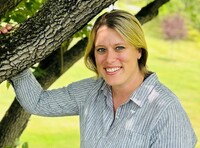
Meet Candace Carlton

“It is immensely important to me to be part of a healing community where we are invested in each other’s growth. Residents and staff all work together. There’s nowhere else like Hopewell.” – Candace Carlton

Meet Candance Carlton, LISW-SP, RSP, clinician and Quality Improvement and Compliance Director – a true veteran who has been on staff since 2000. If you wanted to store all the hats she wears, you wouldn’t need a shelf – more like a closet! As a member of the Leadership Team, her many roles and far-reaching involvement exemplify her passion for the community and for personal growth.

Throughout her life you can see the influence of her grandmother, Pearl, who has encouraged her to pursue education and opportunities. “My grandmother taught school in Alaska, but she did not pursue her degree until she was 45. She always urged me to follow my dreams and continue to learn, even when others said I was ‘too old’ or ‘too busy’ to make time for education,” Candace said. She completed a bachelor’s degree in criminal justice at Kent State University at age 28 while working a full-time job and raising a daughter as a single mother.

When asked what drew her to working with people with mental illness, she said, “I had a loved one who was suffering, and I went to a support group fun by NAMI (National Alliance for the Mentally Ill). This experience deepened my understanding of mental illness, and I wanted to know more. It opened my eyes to mental health.”

“After I got my degree, I wanted to work here so I called the hiring manager every week for two months,” Candace laughs. When she began her tenure at Hopewell, the staff we currently call program facilitators were case managers. Her part-time evening position encompassed working directly with residents, taking people shopping and on outings. “We did not have as robust a clinical staff as we do now,” she remembered. “As I transitioned to full time, I was certified to pass medications and take blood pressure. I concentrated on supporting residents with their personal care goals, we went for walks in the woods, went fishing, played volleyball, and participated in work crews.”

With the encouragement of the Leadership Team, Candace went back to school to acquire her master’s in social work from Youngstown State University. Grandmother Pearl was there in spirit with words of support and encouragement.

Let’s Start Counting Hats

A major portion of Candace’s work at Hopewell is administration. Many years ago, she helped get Hopewell ready for accreditation from CARF (Commission on Accreditation of Rehabilitation Facilities), which stepped up our professionalism as an institution. She also eventually became the compliance director, which led to working on administrative pieces with CARF and ODMHAS (Ohio Department of Mental Health and Addiction Services) as well as overseeing research and outcomes. She has worked on implementing ODMHAS (Ohio Department of Mental Health and Addiction Services) and ODODD (Ohio Department of Developmental Disabilities) standards for our certification. Three times a year as a CARF surveyor, she travels to other residential treatment facilities to consult on meeting certification standards and improving services. On top of all of this, she prepares outcome studies and performance improvement projects and functions as the client rights officer.

Wearing her “clinician” hat, Candace carries a small caseload, develops treatment plans, provides individual therapy, and facilitates weekly Resident Council meetings. Over the years, Candace has been certified as a practitioner of several therapeutic modalities, including Sandplay therapy, which helps residents process inner emotions in a nonverbal way and EMDR (Eye Movement Desensitization and Reprocessing), an individual therapy which helps people process trauma, and Acceptance and Commitment Therapy. Two of her favorite resident activity groups are Spirituality, in which residents explore universal spiritual themes and become comfortable sharing their religion, and Mindfulness and Meditation. When wearing her “employee” hat, Candace leads the Diversity, Equity, Inclusion, and Accessibility group.

“A great day at Hopewell means residents helping one another and having a sense of belonging to the community,” Candace remarked. “Two recent special memories are when the residents, staff, and families gathered together for the eclipse and when our Musical Journey group held a concert. Everyone is so talented.”

Candace loves to go to concerts (blues rock and Joe Bonamassa are her current favorite), reads a great deal, crochets, sews, and loves being in nature. She enjoys painting, drawing and sketching, especially trees. She is a Lucille Ball fan and she has DVDs of all of the “I Love Lucy” episodes. Candace enjoys travel and has been to 35 states. She would love to see the states she has not visited yet and has considered Ireland, Wales, and England for future trips.

Thank you, Candace, for everything you do for Hopewell!

Meet Sarah Turner

“I really like having a front row seat to people’s healing,” says Clinical Services Coordinator Sarah Turner.

A Hopewell Journey

Sarah always knew she wanted to work with and help people, not just hold a 9-5 desk job. Her Hopewell journey began in 2014 when she came onboard as a PRN program facilitator; she then worked her way into her current role.

Families first encounter Sarah when they consider Hopewell as an option for their loved one’s residential mental health care. “Talking to families in crisis makes this a tough job on some days,” Sarah said. “These conversations are crucial to determine whether the potential residents would be a good fit for Hopewell, and to be sure we can meet their needs.

“Hopewell is never the first go-to for residents,” she continued. “Listening to families, I hear about numerous hospitalizations, suicide attempts, and more. People call to talk about very heavy things. I listen empathetically, take notes, and talk them through the admissions process.”

Talking to families can make it a tough day and it’s necessary to process those emotions. “The stories that I hear are often difficult. It can really play on my emotions. There are times that I feel the need to decompress. We are lucky to have a gym here at Hopewell as well as a track to walk. Getting away from my desk and going for a quick walk is helpful. Talking with coworkers is also very helpful.”

By the time someone is admitted to Hopewell, Sarah and the admissions team know their whole story. Sarah shared, “I love it when I get to meet someone face to face and admit them, and they are so grateful for what we have done to get them here. Then over time it’s very satisfying so see their success.”

Some aspects of Sarah’s job are administrative in nature. She helps residents qualify for Medicaid to cover the cost of prescriptions and other medical services. She also assesses residents for disability benefits, which assures that they will have some funds coming in. As residents begin to look for options after Hopewell, she works on discharge planning with the clinical team and helps to ensure that residents are set up for success when they leave. “All of these parts of my job are self-taught. I did a lot of research, took some classes and found that I really enjoy it!”

Family Time and a Passion Project

Sarah finds a lot of joy in family time with her grown children and her youngest, a four-year-old. “She keeps me busy! Being with her brings a lot of kid-like wonder and joy that you lose when your kids get older. I have regained that through her.” She also enjoys metalworking with her dad, who is teaching her how to weld in his metal shop.

But Sarah’s real passion project is somewhat surprising. She devotes spare time to being a resource for families of children who have cleft lip or cleft palate. “I belong to a lot of online forums for parents of these children, where I try to answer questions from the standpoint of someone with experience.”

Sarah was born in 1981 when there was no ultrasound technology to show that she had a cleft. This shocked her young parents, barely out of their teens – here was a baby with a facial deformity. The only person available to talk to her mother was the surgeon, as there were no other support resources. “My parents had an unusual approach to my surgeries,” Sarah remembered. “They always planned them around the holidays so there was something to look forward to while I was recuperating.”

Sadly, Sarah was bullied at school and things were difficult. “This affected my mental health – I just did not feel good about myself and I became depressed. A turning point came after I graduated high school and I felt empowered to say I was done after roughly 25 surgeries. I chose to accept how I looked and start moving forward with life rather than focusing on what surgery would happen next.”

Talk about turning pain into promise!

Sarah pursued a double major in sociology and psychology at Youngstown State University. Eventually she accepted a position with Comprehensive Children & Family Services in Pennsylvania, where she did wraparound work with children who had autism and other mental health and behavioral issues. She worked with kids in school, at home, and in community settings, and developed treatment plans for them. This was very rewarding.

When her middle daughter started kindergarten, Sarah became a substitute teacher. She loved teaching and found working with kids with different abilities enjoyable.

Motivation and Meaning

When asked about what motivates her to work with people with mental illness, she mentioned, “I have a desire to help make a positive impact on the lives of those with mental health issues and find fulfillment in witnessing their progress and healing.”

The family environment at Hopewell means a lot to Sarah. “My favorite memory is when we had a Family Fun Day on campus. Residents, staff, and their families came together, made apple cider and s’mores. It was a neat feeling to watch my little girl interact with everyone. Hopewell is home for many residents, and they aren’t around children often. Seeing how they interested they were was heartwarming. That day wasn’t about their illnesses – it was about having fun. I was so happy to see joy on their faces as they all ran around to different activities together with their families.”

Some of Sarah’s future plans include traveling out west. She would love to do a family RV trip where they can stop whenever they want to look around. Given her energy and drive, we have no doubt that will happen someday soon.

Thank you, Sarah for everything you do!

Clara T. Rankin, 1917-2025

Dear Hopewell Friends,

With heavy hearts, we share the news that our founder, Clara T. Rankin, has passed away. While words feel insufficient in expressing the depth of this loss, we want to take a moment to honor her incredible vision, dedication, and the lasting impact she has made on all of us.

Mrs. Rankin founded Hopewell in 1993 with a clear mission to provide an opportunity for adults with serious mental illness to experience a self-reliant and satisfying life through participation in a vibrant residential therapeutic community. Her unwavering belief in the role that nature and meaningful work play in mental health recovery and her tireless effort has shaped this organization into what it is today. She did not just create a non-profit—she built a strong community that will continue to thrive in her memory.

Her legacy will live on through the work we do together and the lives of the individuals and families that we touch. She inspired all of us to give of ourselves, to stay committed to our mission, and to always strive for better outcomes. As we move forward, we remain dedicated to carrying on the vision she set in motion, ensuring that the work she so passionately started continues.

While we mourn her loss, we also celebrate her remarkable life. Our thoughts are with her family, friends, and all who were blessed to know her.

Together, we will keep her vision alive, honoring her by continuing the mission she so deeply believed in.

Warm regards,

Colleen Welder, Executive Director

DONATE