Close

Who We Are

Strategic Plan

Board of Directors

Staff

Annual Reports

Overview

Transition Services

Sample Daily Schedule

Facilities Tour

Overview

Measuring Success

Success Stories

For Caregivers

For Professionals

Fees for Service

Apply

Corporate Partners

Planned Giving

Donate

Wishing Well

Exploring Mental Health

Summer Solstice 2026

Concrete Leaves: Art Project Leaves a Lasting Impact on Mental Health

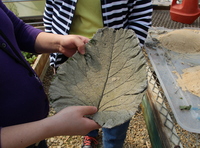
At Hopewell, we encourage our residents to express themselves through a variety of artistic outlets. One of these takes place in our creative art center making concrete leaves. Concrete leaves are beautiful ways to preserve nature while helping residents increase their patience, creative thinking and attention to detail.

Artistic expression helps our residents to understand their emotions through the creative process. While it increases self-awareness, it also increases awareness of others. This helps improve coping skills, cognitive function, self esteem and personal development. Self-expression through different projects has helped our residents grow as individuals.

If you would like to create concrete leaves at home, the instructions appear below. If you aren’t feeling artistic, concrete leaves, along with many other arts and crafts made by our residents, are available for sale in our Farm and Craft Market.

Our Market offers a wide variety of unique gifts and crafts that are made by our residents. You will find cutting boards, custom-made signs, bird houses horseshoe crafts, maple syrup produce and eggs when available and our hand-crafted concrete leaves. The Market is located at 9459 State Route 534, just two miles south of Mesopotamia Commons. The Farm and Craft Market is open from 12:00 p.m. to 4:00 p.m. Wednesday through Friday, and Saturdays from 10:00 a.m. to 2:00 p.m.

What you will need:

A large leaf, preferably with a detailed vein pattern

Plastic bin or large bucket

Medium or small bucket

Sand

Plastic wrap

Quick dry cement

Water

Rubber gloves

Wire brush or sandpaper

Acrylic paint and brushes

To make your concrete leaf:

Step 1:

Fill your bin with enough sand to make a mound at least as wide as your leaf. If the sand is falling and not making a good mound, add a little water to get it to stick. The shape of the sand is the shape that the leaf will take, so make it is as flat or rounded as you want. You can also get the edges of the leaf to curl by pushing down the edges of the sand pile.

Step2:

Cover the sand with plastic wrap. This will prevent the sand from sticking to the leaf and keep the concrete out of the sand.

Step 3:

Place your leaf on the plastic wrap. Make sure the side of the leaf you want to have the imprint of is facing up.

Step 4:

Wearing your gloves, use a small bucket to mix the concrete. Follow the directions on the concrete package for the proper water ratio. You will want your mixture to be about as thick as mud. Make enough concrete to cover the entire leaf with two inches of concrete.

Step 5:

While still wearing your gloves, cover your leaf with the concrete mixture. It is best to apply it by the handful, but make sure you pack it all together and tap it frequently so it gets into all the veins and details of the leaf. Don’t push too hard to shift the sand. You want to evenly cover your leaf with about two inches of concrete.

Step 6:

Leave your leaf sitting outside, in the sun if possible, for at least a full day. If you are unable to leave your leaf in the sun, let it dry outside or in an open garage for at least two days.

Step 7:

Once the concrete is completely dry and cured, remove the leaf and concrete from the plastic wrap and sand. Very carefully peel the leaf off the concrete. If your leaf is not peeling off cleanly, you can leave it in the sun for a couple of hours so the leaf dries out and will flake off.

Step 8:

Once the leaf is removed from the concrete, use the sand paper or a wire brush to smooth out the sharp edges. Allow the leaf cure for at least a week before you set it out for display or paint it.

Step 9:

Time to get creative, pull out your paints and make your leaf beautiful and colorful! We suggest acrylic paint, but we know many people have great success with different kinds of paints. If you are going to display your leaf outside, we also suggest sealing it with concrete sealer.

Resources:
http://www.marthastewart.com/

Sewing for Healing

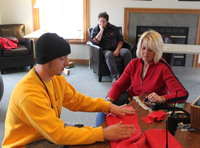
The marketable art work crew has chosen some new ideas for the winter and upcoming holidays. We are incorporating some sewing projects that will be for sale at the Hopewell farm & craft market.

Residents are learning basic sewing skills such as sewing buttons, mending clothing and putting hems in garments. These are life skills everyone can use. Residents will be shopping for material, thread and supplies. Staff and residents will be making lounge pants and also holiday items for our Christmas open house in November.

Hopewell has had some extraordinary and talented people passing through its doors. When residents can focus on their projects, put their personal stamp on it, their self-esteem is boosted. The creative process has many healing properties.

Camping at Wellman Pond

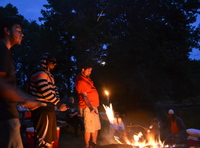
A couple weeks ago, eight residents and two staff members set off for an unplugged camping experience at Wellman Pond. Residents were able to delegate duties and demonstrated great cooperation with each other.

Some of the duties entailed preparing meals. They cooked all the meals themselves over an open fire including hamburgers, turkey burgers, baked potatoes, chicken and vegetable kabobs, cinnamon rolls baked in orange peels, and pancakes.

All of the residents in attendance demonstrated great independent living skills. We held team meetings to discuss our perceptions of how we have assets that contributed to the collaboration as well as liabilities. In the evening, we enjoyed listening to the acoustic melodies of the residents as we sat around the fire and ate. There was great feedback from the residents who were grateful for the opportunity and are looking forward to planning our next camp outing.

Camping gear donations for the nature group would be greatly appreciated!

It’s a WRAP!

Six of Hopewell’s residents recently completed a WRAP (Wellness Recovery Action Plan) program at Hopewell. This is a six-week, two-hour Saturday course sponsored through NAM (National Alliance on Mental Illness.) It was founded and developed by Mary Ellen Copeland, a speaker on recovery and self-help and the author of many books related to recovery.

This program is designed to help individuals work on aspects of their mental health recovery including identifying triggers, developing a crisis plan, recognizing early warning signs, daily maintenance plans and preparing a wellness toolbox. In the toolbox is a list of things they created to help them stay well as they transition back into the community.

These residents now will have a notebook to remind them of ways to increase their mental, physical and spiritual wellness. On July 30th the Hopewell community recognized the six residents with this special cake.

Congratulations!

NATURE AT ITS BEST!

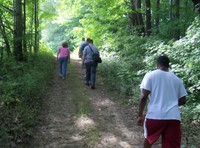
One of the greatest gifts Hopewell has to offer is our beautiful surroundings. Although our community can take walks though our vast trails during their spare time, there is a very popular group that many look forward to each week.

Nature group provides an opportunity for a different type of mental health healing. Residents and staff venture into the woods to observe various types of trees, foliage, flowers, butterflies, as well as several different smaller animals. It is especially nice during the springtime when the temperature is at its best and the colors are so vibrant.

Walking the trails is not only a learning experience, but also a chance for solace, reflecting on one’s inner peace, and fitting in some relaxing exercise at the same time.

Hopewell Community in a Song

What’s happening at Hopewell these days? Well spring is here and with it is a new song from the Hopewell band.

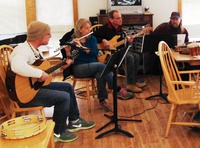
Every morning we at Hopewell have a music therapy group in the dining room. The music is produced by the Hopewell Band. The band includes 4 residents and 4 staff members but this number changes depending upon the residents that want to be involved. You can come and play or you can come and listen to the music. All winter long we have been practicing hard to produce a song for the Hopewell web site.

A few weeks ago, the band went out and made a recording of the song called “I can see clearly now” originally written and recorded by Johnny Nash. The song’s optimistic lyrics and unabashedly upbeat tempo in D-major is a great theme for Hopewell residents.

We had a great day out recording the song, stopping first at a local diner for lunch and then punching it out for 5 hours in a local recording studio. We also want to thank Tom at the recording studio Kick a Mix Recording Studio for working with us. He was very patient with us and had excellent suggestions for us.

Things are getting saucy at Hopewell

As I am reflecting on the highlights at Hopewell this past week I can still smell the aroma of fresh picked apples. But more importantly I am excited about the community that has been created by picking apples last Tuesday. A friend of Hopewell invited us out to pick apples from their orchard. So we went forth in vans and trucks to pick apples and came back with a truck load of apples that now needed to be processed. The garden crew washed and peeled and chopped all morning which produced an apple pie for lunch. The next day we captured the farm and maintenance crew as well as the garden crew and produced 5 gallons of wonderful applesauce. There were also individual and random apple processors that washed and washed and washed the gallons of apples that we picked and sorted them for storage. One resident peeled and cored a box full of apples for the freezer to be baked some blustery winter day to remind us of the wonderful apple adventure we had. We also had a day of apple cider pressing involving several crews.

Many hands make light work it has been said and it took all the cooperation of the community to help us all enjoy the many apples we have.

Ten Ways We Can Help Facilitate A True Integration of Behavioral Healthcare and Primary Care

It is the expressed opinion by many that behavioral healthcare remains a fragmented and uneven system of care for individuals experiencing serious and persistent mental illness – both for adults and children – despite the best intentions of those of us in the field to make it more functional.

Funding has been insufficient to meet the range and severity of behavioral healthcare needs facing our communities. Doing “more with less” is a common mantra heard throughout the behavioral healthcare industry. Developing greater operational efficiencies, collecting measureable outcome information and sharing best practices remain works in progress.

The Affordable Care Act (ACA) and the recent development of ‘health home” networks, as well as, Medicaid expansion promise to be important steps forward in serving as a catalyst for implementing new and more comprehensive ways of advancing our healthcare system. The integration of primary care and behavioral health care will be a key factor in helping to achieve a seamless “system of care” where benefits are improved and runaway healthcare costs can be reined in. The next generation of healthcare delivery envisioned by many is one where we provide a truly “integrated” bio-psycho-social level of care that further recognizes functional aspects such as familial/social support systems, spiritual awareness, connection to nature and the environment as integral components of the healing process.

According to Ron Manderscheid, Executive Director of NACBHDD, the movement is toward whole and person-centered care, peers as navigators, management of benefits and linkage of social services. This successful integration will, inevitably, require that behavioral health care be represented as a key player/partner in the decision-making process and that care is comprehensive. I believe such a process will require a significant conceptual change as, heretofore; behavioral care has often been positioned in a more adjunct role in the delivery of mainstream healthcare. Integration is needed, but compartmentalization of behavioral healthcare will not achieve these goals.

Our challenge in the behavioral healthcare field will be to stay on course and not settle for something less. Implementation of a truly integrated model of healthcare will require a more egalitarian, horizontal model of care.

The question is, how and can we in behavioral healthcare help move this more holistic concept to reality? Ten ways I believe we can help make this possible are:

1. Insure that behavioral healthcare interests are “at the table” early and often in planning and policy making meetings, at national, state and local levels. Taking an active assertive/advocacy role in these discussions will be essential, for all behavioral healthcare stakeholders.

2. Listen to the perspectives of others across the industry. It will be important to incorporate ideas about what “person-centered care” will really mean in an evolving healthcare environment.

3. Collect a range of input from recipients’ and former recipients of behavioral healthcare services in order to develop a truly comprehensive construct of opinion. (Note: collecting this input may require developing outreach initiatives and more creative means to insure these perspectives are truly heard and valued.)

4. Co-locate behavioral health and primary care providers in order to build collaboration, improve overall care, achieve economic efficiencies and facilitate improved communications

5. Adopt a “recovery” outlook toward significant and costly physical illnesses, rather than a singular “maintenance/status quo” medical only approach. This links hope/motivation/outlook to the way that life/treatment is pursued and lived.

6. Leverage our behavioral knowledge and approaches to boost the acceptance and effectiveness of medical treatments by linking prescribed treatments to a behavioral willingness/motivation/readiness to change model.

7. Demonstrate the practical value of behavioral healthcare services to the community by actively addressing such key “wellness” issues as:

  • Homelessness
  • Drug abuse
  • Domestic violence
  • Behavior problems at work or in schools
  • Productivity in the workplace

8. Teach effective prevention skills to young audiences and bring more mental health services into our schools with a focus on keeping kids in school, learning everyday coping skills and supporting parents in keeping their children’s education as a priority.

9. Establish more peer-operated services and give trained peers an expanded role in helping promote wellness programming

10. Reduce unnecessary hospital emergency room usage by implementing expanded crisis intervention training to law enforcement personnel and diverting appropriate psychiatric/intoxication cases to mental health crisis services and/ or sober living services.

Planning and linking people to critical and/or essential services in a comprehensive/integrated model of care means people are receiving the Right service at the Right time at the Right cost by the Right provider. A fully integrated health care system offers the best opportunity to accomplish this, but only if behavioral healthcare is fully represented in this “comprehensive “array of care. The ten points above are but a few suggested ways to help achieve this end.

I believe assuming an active role and identity in helping to facilitate a truly integrated healthcare system will be a challenging, but achievable pursuit for the behavioral healthcare industry. In a system where too many people with mental illness go untreated, undertreated or are relegated to such inadequate community solutions such as jails/prisons, unemployment rolls, welfare assistance, or settling for substandard housing or less, we can and need to do much better.Those of us in the behavioral healthcare field can be advocates and inspirational guides to insist in achieving better for our communities by playing a lead role in helping to facilitate true healthcare reform that is both comprehensive and fully integrated.

Group Therapies Support Recovery

Each week throughout the afternoons at Hopewell, residents have the opportunity to choose from groups that support their recovery in many different ways.

Mental Health Education group is a forum for information and peer support. When residents understand their diagnosis and symptoms, they are more apt to be active in their treatment and consistently take their medication.
Ben (resident): This group helps me understand my diagnosis better, which in turn helps me manage it better.

Dialectical Behavioral Therapy uses mindfulness, emotion regulation and distress tolerance to help residents develop an awareness and sense of control over their emotions and behavior.
Adrienne (resident): We go through four sets of skills and when we’ve completed each one we get a laminated card to take with us. I have all four cards but continue to go because the group is always fresh and engaging.

Equine Assists Program helps residents explore their emotions and behavior through planned activities with horses. Hopewell staff is certified through the Equine Assisted Growth and Learning Association (EAGALA).
Cassie (resident): It helps me relate. How I act around animals gives me a deeper understanding of my emotions and behaviors.

Mindfulness Meditation teaches people how to be present and aware. Residents use this practice to increase their ability to heal and shift away from depression and anxiety towards happiness, relaxation and emotional balance.
Cathy (resident): I’ve learned to use my mind to relax my body and my spirit.

Nature Based Therapy members take to Hopewell’s beautiful woods and fields to learn about how nature’s changes can mirror our own and how we can find insight and understanding through this knowledge.
Langston (resident): It reinforces that I’m a part of a bigger macrocosm. You look at a problem in a different light and see how big things are and how small your problems are.

Resident Council was established to engage residents in how the Hopewell community functions. Three to five residents, who qualify for membership, make decisions about trips and activities and address community issues as they arise.
Candace (staff): Resident council gives council members the opportunity to provide feedback on what’s happening at Hopewell and to engage their fellow residents in activities everyone enjoys.

Mood Management teaches residents the skills to have greater control over their moods. This very useful group uses cognitive behavioral strategies to help people identify the thoughts and behaviors that influence their moods.
Daniel (staff): Mood Management helps residents explore their emotional reactions to life circumstances and learn to regulate the more intense of these reactions that negatively impact their functioning and relationships.

Post-Traumatic Stress Disorder Education helps residents identify, evaluate and change inaccurate thoughts and beliefs that lead to negative feelings. This group teaches self-management skills that help residents address negative emotions like anxiety, depression, guilt, shame and anger.
Rachel (staff): We all have experienced trauma in some way and need to learn skills that lessen the impact of this ongoing stress in our lives.

Spirituality Group encourages spiritual awareness and celebrates our spiritual/cultural differences. Activities like poetry, art, reading and field trips support residents in finding meaning and purpose in their lives.
Antonio (resident): It is fun, discovering about ourselves and others and it relaxes me.

How Can We Help Facilitate a True Integration of Behavioral Healthcare and Primary Care?

It is the expressed opinion by many that behavioral healthcare remains a fragmented and uneven system of care for individuals experiencing serious and persistent mental illness – both for adults and children-despite the best intentions of those of us in the field to make it more functional.

Funding has been insufficient to meet the range and severity of behavioral healthcare needs facing our communities. Doing “more with less” is a common mantra heard throughout the behavioral healthcare industry. Developing greater operational efficiencies, collecting measureable outcome information and sharing best practices remain works in progress.

The Affordable Care Act (ACA) promises to be an important step forward in serving as a catalyst for implementing new and more comprehensive ways for advancing our healthcare system. The integration of primary care and behavioral health care will be a key factor in helping to achieve a seamless “system of care” where benefits are improved and runaway healthcare costs can be reined in. The next generation of an integrated care model envisioned by many is one where we address the “whole person,” including their bio-psycho-social functioning, their social support systems, spiritual awareness and connection to nature and the environment as a healing resource. The movement is toward “whole and person-centered care, peers as navigators, management of benefits and linkage of social services” (Manderscheid).

Essential to this successful integration, however, will require that behavioral health care be represented as an equal player/ partner in the decision-making process and that care is truly holistic. I believe such a process will require a significant conceptual change as, heretofore; behavioral care has often been positioned in a more adjunct role in the delivery of mainstream healthcare. Integration is needed, but compartmentalization of behavioral healthcare under the guise of a holistic care model will not achieve these goals. Our challenge will be how to stay on course and not settle for something less. Implementation of a truly integrated holistic model of healthcare will require a more egalitarian, horizontal model of care.

The question is how and can we in behavioral healthcare help move this more holistic concept to reality? Some ways I believe this may be possible are:

1.Behavioral healthcare interests must be “at the table” early and often in planning and policy making meetings, at national, state and local levels.

2.Taking an active assertive/advocacy role in these discussions will be essential, for all behavioral healthcare stakeholders. We have considerable knowledge, experience and expertise in delivery systems aimed at the whole person and can share this with a range of others in the healthcare field.

3.We can also listen to the perspectives of others across the industry. It will be important to incorporate ideas about what “person-centered care” will really mean in an evolving healthcare environment.

4.Collecting a range of input from recipients’ and former recipients of behavioral healthcare services will be essential in order to develop a truly comprehensive construct of opinion. Collecting this input may require developing outreach initiatives and more creative means to insure these “voices” are heard.

5.Planning and linking people to critical and/or essential services in a “holistic” model of care means people are receiving the Right service at the Right time at the Right cost by the Right provider.

A fully integrated health care system offers the best opportunity to accomplish this, but only if behavioral healthcare is fully represented in this “comprehensive “array of care. I believe securing an active role and identity in a truly integrated healthcare system will be a challenging, but doable pursuit for the behavioral healthcare industry.

Too often our field has been relegated to ancillary roles in the overall healthcare delivery system, often underfunded, underutilized and sometimes misunderstood. In a system where persons with mental illness go untreated, undertreated or relegated to such inadequate community solutions such as jails/prisons, unemployment rolls, welfare assistance, or settling for substandard housing or less, we can and need to do much better. Those of us in the behavioral healthcare field can be advocates and inspirational guides to insist on achieving better for our communities by playing a lead role in helping to facilitate true healthcare reform that serves the “whole person”

DONATE