Close

Who We Are

Strategic Plan

Board of Directors

Staff

Annual Reports

Overview

Transition Services

Sample Daily Schedule

Facilities Tour

Overview

Measuring Success

Success Stories

For Caregivers

For Professionals

Fees for Service

Apply

Corporate Partners

Planned Giving

Donate

Wishing Well

Exploring Mental Health

Summer Solstice 2026

Giving Thanks Can Be Good for Your Emotional Wellness

While it seems we can sometimes become preoccupied with the misfortunes and negative aspects of life and conversely take for granted the abundance and blessings available to us, it does not have to be this way. Focusing on what we have versus what we don’t can help us find more “value added” meaning and satisfaction in ourselves and others. Expressing gratitude and extending thanks to others is a very emotionally healthy habit to develop and refine. This time of the year, in particular, we have an opportunity to take stock in the fortunes life has to offer. By seeing obstacles as challenges, challenges as opportunities and achievement as progress, we have a formula for realizing more meaning and rewards in life.

Hopewell strives to foster this “gratitude attitude” and outlook in everything we do. Many we serve have faced what seemed to them and others as insurmountable obstacles. We help our residents address each barrier in their life as a doable opportunity to grow and achieve success. Helping our residents’ measure these successes and encouraging them to share with others is an important part of the healing process. Being thankful and expressing gratitude further helps in maintaining a positive focus and reaching goals each has set.

There is much to be gained by giving thanks and sharing gratitude with others. We are particularly thankful to the many that have supported Hopewell’s vision and mission over the years. Because of your belief and support of Hopewell, you have helped make a positive difference in the lives of people we serve. For this we say, “thank you!”
10 Core Values at Hopewell

1. We believe in the power of the community to create an environment of caring, acceptance, compassion, growth and fulfillment

2. We believe that everyone can experience success, find a life of purpose and feel hope. We believe in recovery.

3. We believe that people can be helped to find answers to their own problems through support and care in a physically and psychologically safe environment with appropriate professional help.

4. We recognize the importance of medication compliance and medication compliance as necessary support for recovery from mental illness and of educating our residents to understand the continuing need for both medication compliance and utilization of professional assistance.

5. We believe in respecting, valuing and helping each other.

6. We value the whole person—mind, body and spirit.

7. We believe in the healing power of nature and meaningful work.

8. We believe in being stewards of our resources—property, people and finances.

9. We recognize that we are part of a larger community—including family, neighbors, professionals, supports, mental health agencies and those advancing knowledge in the field of mental health. We value these partnerships.

10. We recognize our responsibility to take a leadership role in sharing what we learn.

Work as Therapy

At Hopewell work plays an essential role in our treatment approach and “community as healer” model of care. Our focus is on helping our residents realize a more sustained recovery and improved level of functioning in managing their illness, through engaging in meaningful work-related activities. This experience often leads our resident to achieving a greater sense of self-confidence and self-reliance while learning and developing meaningful work skills that they may choose to draw upon after leaving Hopewell.

While all members of the Hopewell community are working on their own identified goals, they too, are engaged in helping and supporting each other’s progress as well. For both residents and staff, working together, learning together and experiencing together are all essential aspects of our dynamic, healing community.

As Hopewell is a working farm community that focuses on engaging in sustainable practices, our work crews play a vital role in helping to maintain our day-to-day operations. Each resident, upon their admission to Hopewell, has the opportunity to choose to serve on a number of designated work crews. These assignments include experiences with farm, food service, garden, maintenance, housekeeping crews as well as the opportunity to assist in the art room. Woodshop and Farm & Craft Market.

Coupled with a range of other clinical and therapeutic interventions, as well as medication support, Hopewell’s work program plays a critical role in our “whole person” approach to care. It serves to provide greater meaning and reward in helping others, an enhanced sense of self-who, a feeling of contribution ad social inclusion and an opportunity to build on work-oriented interests and skills.

Treating the “Whole Person”

Hopewell is committed to serving the “whole person” (i.e. mind,bodyand spirit) within the context of a safe, nurturing and supportive environment. We also recognize the importance of integrating the power of nature andcurrentstate of the art therapies in helping individuals with serious mental illness recover and experience sustained healing. We value each individual as unique, creative and gifted in their own way.

As such, a key component of Hopewell’s therapeutic milieu will continue to be the incorporation of expressive arts. Utilization of such media as painting, psychodrama, dance, sculpting, music, journaling, sketching and expressive arts are geared to “bridge the gap between the conscious and unconscious.” They can bring insight to areas of therapy that are blocked, inhibited or stuck and bring greater focus to those areas of need and or concern. Expressive arts can spark creative imagination, problem-solving and integrative learning through a variety of sensory experiences. The deepening and enriching experiences that expressive arts therapy offers supports a richer and more vibrant therapeutic environment throughout the Hopewell Community.

Hopewell’s professional commitment to the expressive therapies has been further enhanced through the hiring of Mary Cassidy, a certified art therapist and counselor in September 2015. Mary earned a B.A. in Art History from John Carrol University and a Master’s Degree in Art Therapy and Counseling from Ursuline College. This addition of staff expertise and programming has resulted in our residents having exposure to an even wider range of treatment options and techniques.

What is Moral Treatment?

The concept of “moral treatment” focuses on treating individuals with equality and respect within the context of a healthy living-learning environment. Furthermore it is an approach that values people being able to freely express their feelings and views, as well as, actively participating in decisions affecting their lives. Hopewell’s “therapeutic community” approach is based on many aspects of earlier moral treatment models, including identifying the “community” itself as a modality for change and incorporating a holistic bio-psycho-social orientation to promoting wellness and sustained recovery. Mutual self-help principles, engaging in work, physical exercise, connecting with nature, eating healthy, modeling virtuous behaviors and promoting the value of teamwork and effective medication management are all important components within Hopewell’s therapeutic community.

Busy Bees at Hopewell

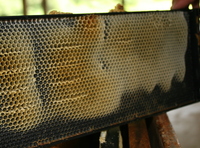
Since April, Hopewell has been busy farming two bee hives. Through the hard work of our residents, volunteers and the bees, of course, we are happy to report that we have harvested honey!

Bees are essential to our ecosystem. They pollinate over 80% of the crops that are grown for people to eat. Bees are fundamental to the survival of fruits, vegetables, some nuts and flowers. Along with their crucial role in growing the foods we eat, bees also help pollinate flowers and nut-yielding plants that are the primary food source for most birds and small mammals. Bees also pollinate cotton plants. So whether you had an apple today, are wearing a t-shirt or you are enjoying something sweet, it was probably thanks to the efforts of hardworking bees.

Raising bees is no small undertaking, so make sure you do extensive research, talk with professionals, and learn everything before you start your own hive. If it is something that interests you, here is how Hopewell went from the idea of a hive to harvesting honey and using it in our diet.

This was not our first attempt at starting an apiary at Hopewell. We learned the importance of not giving up on a goal. So, after two failed attempts, we have a great bee colony that is starting to thrive. We started our successful bee campaign by relocating a new swarm to Hopewell. Both our hives are located in double tubs. We use dividers covered with a mint/honey wax to attract bees and encourage them to build honeycombs. It is important to obtain a hive with a strong queen bee to keep the population growing and producing more honey.

Once the bees fill the honeycombs, it is time to extract the honey. It is important to have a good bee suit to keep your apiarists safe. We start by cutting the caps off the dividers with a heated knife. Then the combs go into the extractor. This will pull the honey out of the combs. There is also a filter that separates the wax from the honey.

The batch of honey we are enjoying currently at Hopewell is clover honey. Next time, we will have golden rod honey. The type of honey depends on the plants the bees are pollinating.

We would like to thank Rick Becker of the Trumbull County Bee Inspector Register for his assistance in getting our dream of a Hopewell bee hive buzzing.

Weaving Fun into Art

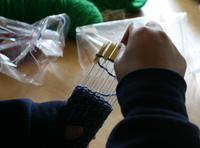
Arts and crafts are regular activities at Hopewell. The residents love the opportunity to be creative and share their talents. Whenever we mention we are going to be working in the Art Room, the residents become visibly excited. They enjoy expressing themselves in the many ways offered by Hopewell. One of our current projects is weaving with straws. The way we weave may be a little nontraditional, but it is easy to do. It is inexpensive to start, and so much fun.

What You Need:

  • 4 to 6 clean plastic drinking straws
  • Yarn (2 colors if possible)
  • Scissors
  • Masking tape

Getting Started:

1. If your straws have a bend, align them and cut them off.
2. Cut a slit in each of the straws on the same end, about 1 inch long.
3. Measure and cut a piece of yarn to about 10 inches longer than you want your finished project to be, for each of your straws.
4. Slide a piece of yarn into each of the straws, about 2 inches past the end.
5. Slide the yarn into the slit in each straw and tape it in place. These pieces of yarn are your cords.
6. Tie a knot around the ends of your cords that are opposite the straws.
7. Align your cord weaving straws.
8. Tie a slip knot with your weaving yarn around your first straw on the left.
9. Start weaving yarn over and under the straws.
10. When you reach your last cord, wrap around the straw. Weave back in the opposite direction to your first cord.
11. Continue to weave back and forth until you reach about 10 rows.
12. Push the weaving tightly together and gently slide it off the straws.
13. Continue weaving groups of yarn together and tightening the groups down the straws until your end product is as long as you desire.

To finish your weaving:

14. Cut the yarn off the straws. Save them for your next project.
15. Cut your weaving yarn about 6 inches longer than your weaving.
16. Knot your weaving yarn around each of your cord pieces of yarn.
17. Once you knot each of the chord pieces, knot a second row back to the first cord yarn.
18. To finish the bottom, knot the cord straws off in pairs. Knot the first and the second cord straws, the second and third cord straws, and down the row until the end is complete.
19. You can trim the cord yarn or leave it as a fringe.

Enjoy your beautiful project. We encourage you to give your hard work to your friends.

If you are not the arts and crafts type, our residents make beautiful weavings. They are available for sale in our Farm & Craft Market. The funds raised by the sale of items in the Market help support our Art Room and projects. Making art in any form is an important part of the healing process at Hopewell. The Hopewell Farm & Craft Market is open Wednesday through Friday from 12:00PM to 4:00PM and Saturdays from 10:00AM to 2:00PM. It is located just two miles south of Mesopotamia Circle, at 9489 State Route 534. Stop by to support healing art and creativity.

Resident Council: Healing from Within

The Hopewell Resident Council was established to support our goals and mission. A charter is in place that explains the purpose, responsibilities, membership, decision-making process and reasons for the establishment of the Resident Council at Hopewell. The main function of the Council is to enhance quality of living and peace across our therapeutic community. The Council implements and improves community functions. At Hopewell, we believe it is beneficial to the development of our residents to stay involved in the decision-making and healing process.

There are certain criteria that must be met by residents who wish to serve on the Resident Council. They must be in the third phase of treatment, and must have transitioned out of the first two phases exhibiting virtuous behavior and personal growth. It is important to set criteria that encourage residents to reach goals they set for themselves.

Equality and cooperation with staff, volunteers and residents are keys to success at Hopewell. These are hallmarks of the Resident Council. We want to ensure our residents feel they are an important part of the Hopewell community. We want them to be engaged, motivated and connected with the farm and staff. The Resident Council has been a success, and we are sharing this success story with other communities with the hope they may emulate this practice for themselves.

Here are some of the core reasons why the Resident Council is so successful.

  • Makes residents a valuable part of the Hopewell community.

The Resident Council allows our residents to gain independence and decision-making power. It is important to allow residents have a say in their own treatment and ensure they are motivated and healing.

  • Promotes understanding of resident needs.

Residents are very communicative with each other. The Resident Council gives the residents a voice to communicate on behalf of fellow residents, and in a timely manner.

  • Teaches responsibilities.

A position on the Resident Council is earned. This prestige gives residents motivation to reach this special level of growth and acceptance. Once on the Council, the members are entrusted to recommend events, plan activities and focus on realistic goals and outcomes for these activities.

  • Turns frustration into energy to solve problems.

Having a problem and no power to solve it can be one of the most frustrating situations any human being may face. The Resident Council gives residents the opportunity to turn their frustration and negative energy into a force for positive problem -solving. When residents are given the power to facilitate change, they are more resilient and able to bring about positive change.

  • Improves morale.

Involvement with successful events has a positive effect on morale. It is wonderful to see the residents pull together to complete a task and enjoy the outcome.

A note to other communities: Peer councils are a wonderful tool to ensure residents feel important and vital to the success of an organization. They are not always easy to establish, and need to be monitored by both the residents and staff. Always ensure residents are patient and understanding with each other through the process. At the end of the day, you will have the opportunity to see resident councils plant their ideas, watch the planning grow and see their resulting happiness bloom.

Individualized Care through Support Groups and Good Cooking

Hopewell focuses on individualized care that helps our residents improve their mental health and thrive. Residents come to Hopewell with different characteristics, skills, experiences and challenges. We work with each of them, one-on-one and in a variety of therapeutic groups, to ensure their treatment is the most effective possible.

Hopewell offers:

  • Group counseling
  • Creative expression
  • Equine-assisted learning and horsemanship
  • Meditation
  • Spirituality
  • Nature studies
  • Education (high school diploma and GED preparation)
  • Money management
  • Independent living skills (meal planning, shopping, cooking, healthy living)
  • Interpersonal relationship skills

Hopewell residents possess a wide range of interests and talents. For some, cooking is a passion. (One of our residents has been a chef.) These individuals especially appreciate Hopewell’s attention to growing, preparing and eating healthy food.

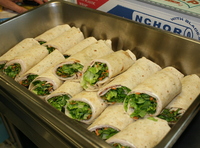
One of our residents’ favorite entrees is a turkey/cranberry chutney wrap. Enjoy this easy, healthy recipe at home.

Turkey/Cranberry Chutney Wraps

(Makes 8 wraps)

Ingredients:

8 Soft tortilla shells

4 cups fresh or frozen cranberries

¼ cup sugar

¼ cup water

¼ cup red wine vinegar

1 cup chopped tart apple (such as Granny Smith)

½ cup dark raisins

1 lb. roasted turkey breast, shredded (to be divided among 8 wraps)

½ cup orange juice

1 cup shredded carrots

¼ chives, chopped

3 Tablespoons extra virgin olive oil

1-1/2 to 2 cups arugula (or as desired)

Mayonnaise as needed (approximately ½ cup)

Directions:

1. Mix together cranberries, sugar, water and vinegar in a large saucepan. Cook over medium heat until berries pop, about 15 minutes.

2. Stir in apples, raisins and orange juice. Simmer uncovered until thickened, about 15 minutes. Adjust sugar to taste (up to ½ cup). Refrigerate until ready to serve. (Note: You may not need entire recipe for these wraps.)

3. In a bowl, mix together carrots, chives, olive oil chopped arugula. Add approximately ½ cup cooled chutney mixture, to taste.

4. To prepare wraps, spread 8 warm tortilla shells with mayonnaise. Top with shredded turkey, then with carrot-chutney mixture.

5. Fold each wrap and serve.

No matter what challenges we face with mental health, it is vital to continue learning, improving and moving forward as individuals.

A Beacon of Creativity That Improves Mental Health

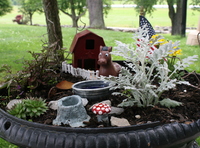
At Hopewell, we incorporate art projects and group activities into the everyday life for our residents. It is important to the healing process to have an outlet for our residents to express themselves, learn and thrive as a community. Our newest art projects are lighthouses and fairy gardens.

Fairy gardens were first made in the United States around 1890. These fantastic homes for fairies started as bonsai dish gardens. It is thought they gained popularity after bonsai gardens were displayed at the Chicago World’s Fair and were featured in an article by the New York Times. Since the introduction of these small gardens, there have been countless imitations. The gardens change and grow with every Hopewell architect who builds a new home for the fairies.

Fairy Gardens

Our fairy gardens are a collection of flowers grown by our residents, original pieces of art and repurposed items. All our fairy gardens are made in planters or containers originally used for a different purpose. We want to ensure useful items are repurposed and given new life. Thanks to the popularity of Pinterest, blogs and other online resources, repurposing and upcycling old items have become easy to do. We are very excited to recycle and repurpose items that still have a lot of life to share.

All the art projects we do at Hopewell are inclusive and are developed in groups to enhance creativity. Our residents come to the farm with a variety of different skills and experiences. We want to make sure they have the opportunity to express themselves and use their abilities to make the world a more beautiful place. We also encourage our residents to communicate and work together as groups to brainstorm and increase the sense of community. When our residents come together as groups, they share their talents and ideas, collaborate to solve problems, connect and accept each other. All of these skills are important for individual growth and improved mental health.

Lighthouses

Lighthouses have been used for thousands of years around the world to serve as beacons for sailors, leading them safely into harbor. One of the oldest American lighthouses, the New London Harbor Lighthouse in Connecticut, has provided safe passage for over 200 years. We experience how our residents can be a beacon for each other to learn, grow and progress during their time with us. Peer support groups and inclusion help our residents heal every day.

Our art projects are not only beautiful and healing, they help support future programs for our residents. Lighthouses and fairy gardens are now for sale in our Farm & Craft Market. The funds the market raises help us keep art as a part of our healing culture. The lighthouses come in different sizes and are either battery- or solar-powered for indoor or outdoor use. The prices vary based on size. The fairy garden prices vary based on the items incorporated into the design. The Hopewell Farm & Craft Market is open Wednesday through Friday from 12:00PM to 4:00PM and is open Saturdays from 10:00AM to 2:00PM. It is located just two miles south of the circle in Mesopotamia at 9459 State Route 534. Stop by to support healing, art and creativity.

DONATE