Close

Who We Are

Strategic Plan

Board of Directors

Staff

Annual Reports

Overview

Transition Services

Sample Daily Schedule

Facilities Tour

Overview

Measuring Success

Success Stories

For Caregivers

For Professionals

Fees for Service

Apply

Corporate Partners

Planned Giving

Donate

Wishing Well

Exploring Mental Health

Summer Solstice 2026

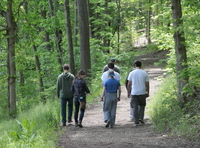
Forest Bathing

Many people enjoy spending time in nature. But did you know that time among the trees is therapeutic? Forest therapy is a growing practice that promises benefits for your mind and your body.

It can help you relax and refuel — and give you a break from the devices, worries and stress that can dominate your daily life. The Cleveland Clinic said, “Take the time to breathe deeply and turn your focus inward. If you can, get yourself outside among the trees. Leave your screens, your deadlines and your worries behind. It’s worth it — even if you can only spare a few minutes.”

Every Friday, you can experience a forest walk with Christina Goodall, LISW-S, as she wanders the beautiful Hopewell landscape. To register, email Chris at cgoodall@hopewell.cc.

A Healing Musical Journey

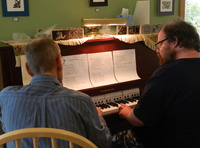
Plato once said, “Music gives a soul to the universe, wings to the mind, flight to the imagination and life to everything.” Hopewell’s Musical Journey Group allows the residents to venture down this creative path, connect with their own rhythm and find harmony within.

Hopewell’s Musical Journey Group has been experimenting with instruments and voice for over a year and they continue to explore melodious possibilities. The program was envisioned as an alternative to traditional music therapy for adults dealing with mental illness. Music has been shown to be healing and to enhance brain function, hand-eye coordination and maintain focus. Based on the belief that music is a powerful therapeutic tool that helps in recovery, the program allows residents to reconnect with their emotions and express themselves through creative means.

The group meets for an hour every week and is open to all residents. Participants utilize yogic breathing techniques and visualization and practice listening while using instruments including guitar, keyboard, wind, percussion and vocals. The majority have no prior musical training or experience, but they are learning more about music and themselves as they play together.

Leading this talented group are Bob Weirich, Hopewell’s Education Program Coordinator, and Jim Miller, a professional musician who has experience working with physically or developmentally disabled adults. Jim said, “We have people on different levels of musicianship and we operate as a democratic anarchy.” The interaction of sound, lyrics and personalities is a challenge and the participants are encouraged to take care of themselves and voice their needs.

Chris attends the group because he loves to sing. His voice rose through the room as the words, “I can’t help falling in love with you,” rolled out of his heart, followed by a rendition of “Sounds of Silence.” Chris looks forward to Musical Journey Group each week saying, “It is really therapeutic and relaxing and lets many of the negative emotions out.”

Christina has been to several other facilities and has never been offered a musical program. She said, “This is a new way to express myself. I have never played guitar before and I am now learning. They are very patient with me.” Christina looks forward to performing for other residents and staff.

Results of the program have been excellent. Residents report increased self-awareness, self-confidence and self-esteem. Their socialization skills have improved through group collaboration. Jim stated, “We talk about different
things when we get together to play. Music is a healing process.”

Hopewell Farm & Craft Market

9637 State Route 534

Middlefield, OH 44062

(On the farm at Hopewell)

Open Thursday-Sunday 12 – 4 p.m.
One of the many ways Hopewell encourages treatment and healing is through arts and a structured work environment. These two aspects perfectly align with healing on the therapeutic farm and are highlighted in the Farm & Craft Market. All of the wares available are handmade by or with assistance from Hopewell residents. We also use as many natural materials from the farm as much as possible. This includes dried herbs, flowers, rock, slate, wood, feathers, goat’s milk, and more.

Residents that take part in the art and wood shop crew also work first hand in the marketing. They do inventory, assist guests, work the register, assist with pricing, and a variety of other tasks. A shopping trip to the Hopewell Farm & Craft Market will not be something you will soon forget. Please take a scenic farm drive and visit us for a wonderful experience that enriches lives every day.

Here are some of the items currently available for sale:

Artwork – original pieces on handmade canvases

Birdhouses

Candles – made with recycled glass and organic fragrance oils

Ceramic Planters – hand built, glazed & fired

Coasters

Ceramic Soap Dishes – hand built, glazed & fired

Fresh Eggs

Incense – made with organic fragrance oils

Jewelry – Lead and nickel free featuring natural stones

Organic soap – made with goat milk and essential oils

Maple Sugar

Woodworking – including custom signs, Adirondack chairs, picnic tables, cutting boards, chess and checkers sets

Enjoy a wonderful afternoon drive and visit to our unique Farm & Craft Market for one of a kind gifts that teach invaluable skills and healing.

Hopewell Farm & Craft Market

9637 State Route 534

Middlefield, OH 44062

(On the farm at Hopewell)

Open Thursday-Sunday 12 – 4 p.m.
Men’s and Women’s Groups

Moral treatment is a key component to Hopewell’s treatment plan for our residents. One aspect of this is ensuring our residents are actively involved in their treatment. This includes the presence of our Resident Council. Through the work of this council our residents are able to create therapeutic opportunities and groups to ensure their best healing.

Two of these groups are our Men’s and Women’s groups. Our residents are all involved in group therapy sessions regularly. Although this group is very beneficial and helpful for our residents’ healing, some of our residents wanted more.

The ability to create new groups and opportunities are some of the many ways that differentiates how Hopewell treats mental illness. Personalized plans and caring are essential to the Hopewell Model of healing. Thanks to the Resident Council these groups are possible. After some conversations about group therapy a few of our female residents expressed interest in creating a separate woman’s group. This allowed our residents to really open up about issues that they were tentative sharing with the community as a whole. There have been so many amazing moments of growth and healing since the implementation of these separate groups.

Once we saw the success the woman’s group was having a men’s group was also created. The results carried over to this group as well. It is always amazing to see group healing succeed, and it is why we are so committed to the therapeutic community model. Men’s and women’s groups exemplify Hopewell’s commitment to empowering individuals toward their highest level of self-reliance, self-confidence and the capacity to live and work within an interdependent, vibrant community.

The Men’s and Women’s Groups meet on a weekly basis to discuss topics especially important to our residents as men or women. Agendas are created and discussions begin.

Individual Service Plan Produces Results

Every Hopewell resident has a personalized goal plan known as an Individual Service Plan (ISP). Each unique plan is created collaboratively between the resident and his/her clinician. The goals are continually visited throughout the resident’s stay.

The skills learned at Hopewell materialize into results that are closely tracked. Outcomes tracking shows that residents who fully participate in the daily programming see progress in the treatment of their mental illness. These results include: decreased psychiatric symptoms, improved interpersonal and vocational skills, improved level of functioning, increased cognitive effectiveness, decreased emotional distress and improved social and occupational competency.

Hopewell’s admissions process is responsive, caring and respectful of the applicant family’s privacy. Residents must be 18 years of age or older, have a diagnosis of a major mental health condition such as schizophrenia, schizoaffective disorder, bipolar disorder, major depression and/or other thought, mood or co-occurring disorder conditions, and must express a readiness for treatment. Individuals should have some self-care skills, be medication compliant and be in reasonable physical health. Success at Hopewell depends on multiple factors. Residents gain the greatest benefits when they are comfortable living in a rural setting and are medication compliant, interested in interacting socially, participate in the program, and want to expand their knowledge and understanding of their mental illness. A resident’s length of stay at Hopewell typically is three to six months, although some residents may have longer stays depending on their treatment plans and progress.

Hopewell’s Therapeutic Approach

The importance of community healing at Hopewell and what makes our therapeutic farm community different than any other mental health treatment.

Clinical and Holistic Approaches to Mental Health Treatment

The “Hopewell Model” has evolved over the past two decades, incorporating a comprehensive combination of clinical and holistic approaches. Individual and group psychotherapy and Psychiatry coverage have been increased. Respite care services have been added, and an Extended Stay Program has been formalized for residents living at Hopewell for more than three years. Services have increased for residents dealing with dual diagnoses of mental illness and alcohol/drug addiction. Hopewell utilizes an electronic health data management system, and recently formalized an assessment process tied to DSM-5 (the Diagnostic and Statistical Manual of Mental Disorders, Fifth Edition, published by the American Psychiatric Association).

Ever responsive to the residents’ needs, new programs have been introduced regularly, and staff receive appropriate training for each new program. Examples include Eye Movement Desensitization and Reprocessing (EMDR), a therapy especially helpful for trauma victims; art therapy; yoga; nature studies; and a food management training program; and a peer-led group training called “WRAP” (Wellness Recovery Action Plan). Most recently, Hopewell began to offer Sand Play Therapy on Sunday mornings. The program is part of a research project being conducted by Dr. Sana Loue, Hopewell’s research consultant from Case Western Reserve University.

Additionally, the residents themselves often create new programs. The Hopewell Band developed from Hopewell’s focus on music. The group has produced two CDs and frequently performs for the farm as well as at Hopewell’s annual benefit event. The Creative Writing Group encourages residents to express themselves through poetry, short stories or personal reflections. Often, their work is published in Hopewell’s quarterly newsletter which is mailed to families of current residents, former residents, donors and other friends.

The Healing Power of Art Therapy

Art therapy allows residents to express themselves in ways they never could before. Take a look into the beauty of art therapy and how it is changing lives with Mary Cassidy, Art Therapist at Hopewell.

Living in the Present Moment

For many of us, one of the most underused resources we have available in our “coping toolbox” is the ability to “live in the present moment.” Choosing to “live in the present moment” means attention to the “here and now” where we can fully appreciate our surroundings and reflect on the feelings and emotions that a particular experience brings to us. It is being “mindful” of our own unique place, time and space in a much larger universe.

Taking a personal audit of where our attention is directed can be helpful in facilitating a more balanced lifestyle and outlook. Three questions you might ask yourself during this audit are:

1. How much time do I spend thinking (worrying) about and/or trying to predict the future?

2. How much time do I fret, regret or reminisce about the good old days or on past shortcomings, mistakes or missed opportunities?

3. How much time do I stay “present focused” on what I am doing and feeling right now?

Some helpful ways to stay present focused may include: simply paying attention to your breathing and posture. Tuning in such sensory areas as smell, texture, colors and sounds around you can help. Sometimes engaging in positive self-talk, performing meaningful tasks for others or participating in healthy, invigorating exercise activities may provide added value. Some people find caring for their pet, tending to a garden or participating in activities requiring mental focus (e.g. Sudoku) useful. Practicing meditation and other healing arts can be very effective “present” oriented strategies as well.

At Hopewell, our community oriented work and nature-based programming are valuable adjuncts to other more clinically focused interventions that we offer. These include medication management, psychotherapy, specialized group treatment and an interactive therapeutic milieu. All are designed to help our residents learn to more fully utilize their own “toolbox.” In doing so, these methods can serve as a means to inwardly balance tendencies to overly rehearse for the future and or dwell on the past in order to attend to and embrace the present moment—perhaps a good lesson for all of us!

Daniel Horne, PCC-S, LSW, Clinical Manager & Director of Admissions at Hopewell

As a licensed social worker and licensed professional clinical counselor, Daniel views treatment from a holistic approach. He was immediately drawn to the healing power of the Hopewell environment and program. Here Daniel explains what makes Hopewell’s approach unlike any other.

DONATE