Close

Who We Are

Strategic Plan

Board of Directors

Staff

Annual Reports

Overview

Transition Services

Sample Daily Schedule

Facilities Tour

Overview

Measuring Success

Success Stories

For Caregivers

For Professionals

Fees for Service

Apply

Corporate Partners

Planned Giving

Donate

Wishing Well

Exploring Mental Health

Summer Solstice 2026

Hopewell Farm & Craft Market Celebrates Fourth Year and Gets Ready for Expansion

The Hopewell Farm & Craft Market is now celebrating its fourth year of offering unique gifts and crafts to the public. Inside you’ll find Hopewell’s award-winning maple syrup, handmade quilts, bird houses, cutting boards, pillows, artwork, farm-fresh eggs and more for sale. There’s also a wood shop that makes custom signs. Almost all the items in the store are made by Hopewell residents and staff. The Hopewell Farm & Craft Market is run by Sandy Thomas, Hopewell Farm and Craft Marketing Manager. Sandy also serves as a Hopewell Program Facilitator. Store Hours are Wednesday through Friday from 12:00 pm to 4:00 pm, and Saturday from 10:00 am to 2:00 pm.

Says Thomas, “The Hopewell Farm & Craft Market is always getting new items. Every time you come in, it’s like a whole new store because our residents are always making new things.” Thomas also says the store is getting ready for some big changes. “In January 2016 we will be remodeling. We’re going to knock out a side wall that connects to our storage area. This will give us much more space to display all our gift items.”

Watch the video here: https://vimeo.com/147785381

Hopewell’s New Sugar House Almost Completed

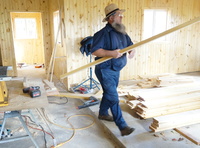
Construction on Hopewell’s new Sugar House has been underway since July 2015. The new 1,400 sq. foot structure is scheduled to be completed by January 1, 2016—just in time for tapping the trees and beginning maple syrup production. The new Sugar House was designed by Amish Farm Manager Norm Wengerd. Norm also oversees Hopewell’s wood shop. In addition to designing the Sugar House, Norm did the excavation, dug the water lines and is doing all the interior woodwork. Norm also hired local Amish craftsmen to work on the project. The new, more modern facility will allow Hopewell to produce around 300 gallons of syrup each season—although Wengerd points out that output is really dependent upon how much sap the trees produce. Output is directly influenced by weather and climate conditions.

The building now has separate areas for boiling equipment, sap storage tanks, bottling and storing firewood for the boiler. It also has electricity, running hot and cold water, and indoor plumbing. In the past, a generator had to be run to warm the building during winter months. “During syrup making season my whole family is over here helping me,” said Wengerd. “It will be nice to have heat and indoor plumbing come January and February.”

Once the new Sugar House is up and running, visitors will be able to take tours of the facility and watch the syrup being produced. There was no access to the old Sugar House by vehicle. “Because we have a road that leads right to the sugar house, it will be easy for visitors to come and check it out,” says Wengerd.

Busy Bees at Hopewell

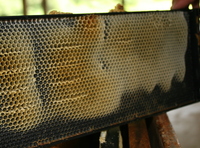
Since April, Hopewell has been busy farming two bee hives. Through the hard work of our residents, volunteers and the bees, of course, we are happy to report that we have harvested honey!

Bees are essential to our ecosystem. They pollinate over 80% of the crops that are grown for people to eat. Bees are fundamental to the survival of fruits, vegetables, some nuts and flowers. Along with their crucial role in growing the foods we eat, bees also help pollinate flowers and nut-yielding plants that are the primary food source for most birds and small mammals. Bees also pollinate cotton plants. So whether you had an apple today, are wearing a t-shirt or you are enjoying something sweet, it was probably thanks to the efforts of hardworking bees.

Raising bees is no small undertaking, so make sure you do extensive research, talk with professionals, and learn everything before you start your own hive. If it is something that interests you, here is how Hopewell went from the idea of a hive to harvesting honey and using it in our diet.

This was not our first attempt at starting an apiary at Hopewell. We learned the importance of not giving up on a goal. So, after two failed attempts, we have a great bee colony that is starting to thrive. We started our successful bee campaign by relocating a new swarm to Hopewell. Both our hives are located in double tubs. We use dividers covered with a mint/honey wax to attract bees and encourage them to build honeycombs. It is important to obtain a hive with a strong queen bee to keep the population growing and producing more honey.

Once the bees fill the honeycombs, it is time to extract the honey. It is important to have a good bee suit to keep your apiarists safe. We start by cutting the caps off the dividers with a heated knife. Then the combs go into the extractor. This will pull the honey out of the combs. There is also a filter that separates the wax from the honey.

The batch of honey we are enjoying currently at Hopewell is clover honey. Next time, we will have golden rod honey. The type of honey depends on the plants the bees are pollinating.

We would like to thank Rick Becker of the Trumbull County Bee Inspector Register for his assistance in getting our dream of a Hopewell bee hive buzzing.

Clara Rankin Nature Preserve

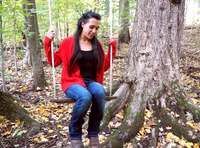
During autumn, the Clara Rankin Nature Preserve is a favorite place for Hopewell residents to take a leisurely stroll. The preserve’s walking trail is filled with flora and fauna and comes alive with magnificent colors. Residents can swing from a tree swing, look out over a scenic valley and survey a large pond. On the return route they can pick apples and even pet Hopewell’s Belted Galloway Cows. It’s a great place to spend a relaxing morning or afternoon.

See the video here: https://youtu.be/-GzT6S3pSmE

Hopewell Purchases a New Kubota Tractor

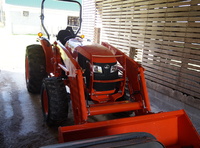
Hopewell recently purchased a new Kubota MX5800 Utility Tractor with a LA 1065 Front End Loader. The 4WD utility tractor is equipped with a 61.4 horsepower Tier 4 Final Kubota diesel engine. It has an improved operator deck with a high-back suspension seat for better comfort. A HST transmission assures smooth performance and productivity. It’s a great new addition to the farm and will get lots of good use.

Hopewell Needs Volunteers to Work at Its Therapeutic Farm Community

The Hopewell Volunteer Program may be one of the most rewarding experiences of one’s life. Volunteers get to live in-residence at the Hopewell therapeutic farm and work alongside the residential clients and staff. Hopewell is located on 300 acres in tranquil Mesopotamia, OH, in the heart of Amish country. At Hopewell, adults suffering from mental disorders such as schizophrenia, bipolar disorder and major depression receive special treatment and care in a therapeutic community.

The Hopewell team nurtures and challenges its residents as they work together in the farm community. Hopewell’s program is developed and supervised by licensed mental health providers with many years of experience in a variety of settings. Clinicians are active in resident and family counseling, case coordination, psychiatric and medication management and discharge transitions.

Hopewell is licensed and accredited by the Commission of Accreditation of Rehabilitation Facilities (CARF) and licensed and certified by the Ohio Department of Mental Health and Addiction Services (ODMHAS).

“This is a great opportunity for recent college graduates who are interested in learning more about mental health,” says Hopewell Executive Director and CEO Rick Karges, LISW-S, ACSW. “We also have had many retired couples and church mission team members come and volunteer at the farm. It’s a great chance to help and serve those in need.”

Hopewell works with volunteers to find the best use of their abilities to benefit the residents and the organization. Volunteers are expected to work 35 hours a week and must be able to commit at least six months of service. “From gardening to animal care to housekeeping, vocational opportunities at Hopewell help residents find strengths they didn’t know they had, experience new roles, learn new skills, gain job readiness and build self-esteem. Our volunteers can help in this process,” says Karges.

During their stay, the Hopewell Volunteer House provides comfortable lodging. Volunteers are provided a private room and all their meals. They also receive vacation time and a stipend for their efforts. But the greatest benefit is learning more about the challenges faced every day by individuals with mental health issues.

“Not only is this a great learning opportunity, volunteers get to actually help people and watch them heal. Hopewell is a very special environment for those struggling with mental health challenges. Our volunteers are very dear to us,” says Karges.

For more information about the Hopewell Volunteer Program, or to request a volunteer application form, please contact Colleen Welder, Hopewell Director of Program Services at 440.426.2000.

###

Hopewell Installs New Garden with Wooden Arbor

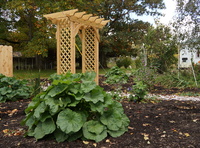
Hopewell recently installed a new garden area with a beautiful wooden arbor in the center. The garden is located directly in front of the Hopewell Farm & Craft Market. Norm Wengerd, who runs the wood shop at Hopewell, designed and built the arbor. The landscaping was designed and installed by Perennials Preferred of Chesterland, OH. The garden features numerous flowers such as Daylilies. Beginning next spring, the Hopewell Farm & Craft Market will be selling fresh cut flowers from the garden. There also will be plenty of fresh produce available. The garden will have watermelons, peppers, green beans and tomatoes. Raised beds were also installed for growing herbs.

Hopewell Receives Accreditation from Commission on Accreditation of Rehabilitation Facilities (CARF)

Hopewell, a therapeutic farm community located in Mesopotamia, OH, announced today it received CARF (Commission on Accreditation of Rehabilitation Facilities) accreditation. Hopewell also earned numerous positive comments in the CARF Survey Summary. Hopewell is located on a 300-acre farm in the heart of Ohio Amish country. Hopewell helps adults who have been diagnosed with schizophrenia, schizoaffective disorder, bipolar disorder, major depression or other forms of mental illness.

The mission of CARF is to promote the quality, value, and optimal outcomes of services through a consultative accreditation process and continuous improvement services that center on enhancing the lives of persons served.

“We are honored to receive CARF accreditation again,” says Hopewell Executive Director/CEO Rick Karges. “It really is a testament to our staff. Everyone at Hopewell is focused on providing our residential clients the very best possible care.”

The CARF standards have been developed over 40-plus years by international teams of service providers, policy makers, payers, family members and consumers. The standards also have been submitted to the public for review to validate relevancy and ensure input from all interested stakeholders. The CARF accreditation process starts with a provider’s commitment to continuous improvement and culminates with external review and recognition that the provider’s business and service practices meet international standards of quality.

In addition to receiving CARF accreditation, here are just a few of the written comments provided on the CARF Survey Summary.

• Hopewell is praised by its funders and referral sources for its innovative practices, such as its nature therapy program, using evidence-based practices, and its work on program evaluation and metrics to demonstrate its impact on the lives of clients.

Board members, leadership and staff at all levels are committed to improving the lives of clients and are passionate about their work.

• Hopewell has built of set of welcoming and comfortable residences and workshops on this farmland; the residences are spacious, well furnished, personalized and welcoming. There is a large variety of daily activities in which the clients can participate, all of which work to provide an excellent environment for recovery.

• Hopewell clients report a very high satisfaction with the services provided; several have lived on site for many years. In addition, several clients report that they were so inspired by their staff that they want to become social workers and therapists themselves.

• Hopewell staff is dedicated, caring and respectful; many staff members have worked at the organization for multiple years, reflecting their commitment to the clients and to Hopewell’s model of a therapeutic community.

About Hopewell

Hopewell is a 300-acre residential working farm located in Mesopotamia, Ohio, where adults with schizophrenia, schizoaffective disorder, bipolar disorder or depression learn to manage their mental illness and return to independent life. It is the only facility of its kind in Ohio, and one of only a handful in the United Sates. Hopewell is ODMHAS-licensed and CARF -accredited. It is a member of the National Alliance on Mental Illness (NAMI) and the American Residential Treatment Association (ARTA). A new backgrounder on Hopewell is available. Information and assessments are available by contacting Hopewell’s admissions team at 440.426.2009. Visit www.hopewellcommunity.org.
DONATE