Close

Who We Are

Strategic Plan

Board of Directors

Staff

Annual Reports

Overview

Transition Services

Sample Daily Schedule

Facilities Tour

Overview

Measuring Success

Success Stories

For Caregivers

For Professionals

Fees for Service

Apply

Corporate Partners

Planned Giving

Donate

Wishing Well

Summer Solstice 2027

Exploring Mental Health 2026

Meditation

What is Meditation? Simply put, meditation is an exercise used to help bring awareness and mindfulness into the present moment. Meditation practices have been used for thousands of years across cultures all over the world to facilitate clarity and observation of thoughts, emotions, sensations, and actions. In today’s mental health field, most evidence-based practices for treating mental illnesses utilize some form of meditation practice as a tool for strengthening one’s ability to be aware and present.

But what is it about the present moment? How does being aware help us in our daily lives?

When people hear the word “meditation”, they may conjure up the image of a peaceful, serene setting, a person sitting cross-legged, eyes closed, harmoniously still and one with their environment. In actuality, the practice of meditation is an opportunity to give attention to whatever we are experiencing in the moment. Sometimes what we are experiencing in the moment may, in fact, be quite disruptive or uncomfortable, overwhelming even. We are often running on “auto-pilot” if you will. We go about our days, avoiding the uncomfortable or painful things that may arise and remain unaware of our distress often until it is too overwhelming to ignore or deal with.

Meditation can be effectively used as a way for us to build tolerance toward all our experiences, regardless of whether they feel peaceful or not. It serves as a tool to help us de-clutter the messes of the moment, to notice our experiences as they are happening, and to invite us to take on an observer’s role so that we may better explore our options for dealing with the issues at hand. As we meditate, we build mindful awareness toward our thoughts, emotions, sensations, and actions without judgment or criticism. We simply notice what comes up as it arises and find ways to observe and describe our experiences based on our observation. From this observer’s role, we are then able to stay with the moment at hand and rationally formulate strategies for coping with the good, the bad, and the ugly.

As we begin to build awareness to the present moment, we may also invoke a sense of spaciousness. This spaciousness gives us room to explore what is going on as we are experiencing it and uncover options for managing the moment. Often, when we become overwhelmed by our experiences, we are not only experiencing the moment at hand, but we are also drumming up unresolved issues from the past or concerning ourselves over future matters that have not occurred yet. Meditation allows us to parse out what is within our control for the moment and what we can let go of for the time being. It enables us to take notice of how our brains and bodies respond to both our internal and external stimuli. It connects us to our sensory channels of information so that we may provide ourselves with the comfort we need when we start to feel overwhelmed. Meditation does not always feel comfortable, harmonious, or peaceful. Instead, it instructs us on how to stay with the moment, even when the moment is threatening to overwhelm us. Meditation opens the doorway to our options for navigating in those moments.

At Hopewell, meditation is a practice that is woven into many aspects of our programming. In clinical groups, residents have an opportunity to be educated on and begin developing their own meditative practices. In our nature groups and eco-therapy, the environment is used as a powerful metaphor for our experiences and in observing nature, we equip our residents with tools to understand the power of awareness. In our equine therapy groups and engagement with the animals on the farm, mindfulness is a necessary component for remaining alert to the animal’s needs, teaching us how to utilize our five senses for observation. Yoga and exercise opportunities help residents learn to regulate and utilize the breath and how to build tolerance for temporary discomfort. In our art therapy and music groups, mindful engagement is paramount to the creative process. We are always looking for new ways to explore meditation here on the farm!

Dialectical Behavioral Therapy in Hopewell’s Residential Mental Health Community

Dialectical Behavior Therapy (DBT) is a type of behavioral therapy that was developed by Marsha Linehan in the 1980s. At that time, Dr. Linehan was working with severely depressed and suicidal patients, and she found some significant deficits in treatment for these patients.

Dr. Linehan had several personal experiences in treatment, and so she blended the wisdom she gained from her own history with traditional mindfulness techniques and the existing treatment models of the time to create a new therapeutic intervention, DBT.

What is Dialectical Behavior Therapy, and How Does it Help Residents of Hopewell’s Residential Mental Health Community?

Let us start by breaking down the first two words of its name.

“Dialectics” is a term that refers to the exploration of duality, or opposites. When working in dialectics, one acknowledges that each position is useful and contains its own wisdom, or truth (even if it is only a tiny bit). Dialectics also maintain that opposite tensions are interconnected and defined by one another. Thus, in DBT, we learn how to embrace opposites and seek balance between them. In this way, we learn fluidity and flexibility to enable change.

Dialectics help us to move away from “black and white” thinking, acknowledging that experiences are seldom ALL good or ALL bad, especially as it pertains to our thoughts, emotions, sensations, and actions. Instead, DBT strives to use terms like “more/less effective, more/less pleasant, more/less helpful,” etc., to describe our experiences. This also encourages folks to seek out the bit of wisdom and usefulness in all things, even if there is only a sliver to be found.

“Behavior” refers to how we respond to the world around us. Our behaviors are based on a multitude of factors, including our biology, environment, and our personal history of experiences. DBT focuses on identifying behaviors that are causing undue distress and suffering, so that one may begin to build more constructive ways of coping. By engaging in skill building techniques for mindfulness, distress tolerance, emotion regulation, and interpersonal effectiveness, DBT provides a myriad of resources to enact behavioral change.

  • Mindfulness skills provide tools for inviting awareness into the present moment without judgment or criticism. One learns how to build a strong habit of mindfulness through intentional observation, focusing on just describing the facts, participating wholly, avoiding evaluations such as “bad” or “good”, being present in the moment, and doing what works effectively. This provides a foundation for all the other DBT skill sets.
  • Distress tolerance skills offer tools for managing crises without making the situation worse. Relaxation, distraction, and self-soothing techniques are implemented for managing our physiology when we are in a moment of distress. Through this DBT skill set, one learns how to regulate themselves more effectively and replace destructive coping strategies with ones that work more effectively and provide increased tolerance building overall.
  • Emotion regulation skills help build understanding of emotions, which includes creating an attitude of acceptance for all emotions, no matter how unpleasant they may be. When it comes to emotions, it is especially helpful to move away from classifying them as “good” or “bad,” as we cannot control our emotional responses to stimuli. In this way, DBT helps to reduce vulnerability to emotions and provides regulation skills when emotions threaten to overwhelm to a point of crisis.
  • Interpersonal effectiveness skills are essential for learning how to get needs met, maintain healthy relationships, increase self-respect, learn how to set and keep appropriate boundaries, and to communicate effectively.

Dialectical Behavior Therapy in Hopewell’s Residential Mental Health Community.

Each of the four tenets of DBT overlaps with one another. The full set builds a strong repertoire of skills that can be interchanged, combined, and personalized to ensure usefulness.

At Hopewell, we offer a DBT education group once per week, as well as an additional weekly DBT skill-building group. We also have clinical staff available to support residents with building personal skills, implementing DBT-based goals into their treatment planning, and provide families with tools they need to reinforce and support these healthy changes.

Fall 2020: Liz’s Hopewell Journey

“Hopewell gave me the day-to-day tools to integrate back into society and provided me with the skills I needed to live independently.”

Hopewell’s University Circle Transition Program

Our new University Circle Transition Program adds the heritage and capability of Hopewell to the vibrancy of Cleveland’s University Circle area.

Like our Club Hope program, our University Circle Transition Program presents a structured and supported way for those discharged from our farm-based residential community to practice and broaden their independent living skills.

Participants in our University Circle Transition Program live in their own furnished apartments, but are supported by a team of Hopewell staff, including full-time staff working in the same building, visiting staff from the farm, and “virtual” farm team members providing services to them via telehealth.

For each new participant, our University Circle Transition Program begins with a high degree of clinical and case-management structure and support, and then is adapted to the needs of each participant. We help them access the rich cultural, entertainment, educational, occupational and mental health services in University Circle at the same time as they build more independence, more confidence, and more effectiveness.

Transition planning at Hopewell begins even before admission to the farm, as our entire purpose is to help farm residents live a more self-reliant and satisfying life. For some farm residents, this transition means returning to their home communities after discharge, either with their original supporting structures or with new structures that our staff has helped them find. Other farm residents after discharge participate in Club Hope, our day program at the farm itself.

To these options we have now added our University Circle program, which is perfect for those who are ready for discharge from our farm, but not yet ready for fully independent living. Participants in our University Circle Transition Program, through the resources we both make directly available to them and also help them discover in the University Circle area, can make a structured, supported, and Hopewell-integrated transition to more independent living.

University Circle is at the center of much of Cleveland’s educational, health care, arts, and employment communities. Within a mile of our Transition Program apartments are Case-Western Reserve University, the Cleveland Institute of Art, the Cleveland Music Settlement, Magnolia Clubhouse, University Hospitals of Cleveland, the Cleveland VA Medical Center, the Cleveland Clinic, the Cleveland Museum of Art, the Cleveland Museum of Natural History, the Museum of Contemporary Art, the Cleveland Botanical Garden, many parks, and countless volunteer, employment, dining, entertainment, and shopping opportunities.

2019 Outcomes Report

Please read Hopewell’s 2019 Outcomes Report

Art and Art Therapy in Hopewell’s Residential Mental Health Community

Art therapy is a type of healing modality that utilizes creative expressive arts to explore, express, and alleviate psychiatric distress. It is based on the belief that self-expression has healing value and enables those engaged in the process of art-making to deepen their sense of self and meaning. Art therapy offers a vast array of techniques and projects to meet the needs of both individual and group settings. At Hopewell, we explore many of these offerings in a variety of ways on the farm!

Art Work Groups in Hopewell’s Residential Mental Health Community

Art therapy is embedded within Hopewell’s meaningful work projects. Five days a week, residents meet in the art studio and learn how to craft a variety of wares that are sold in local shops.

Each project is designed to promote group engagement, skill building, creative problem solving, risk-taking, time management, following direction, and project completion. Self-care products, fiber arts, pottery, and woodworking skills are taught to residents as the community comes together to craft products that benefit health and well-being.

Art Therapy in Hopewell’s Residential Mental Health Community

In Hopewell’s art therapy groups and individual sessions, residents explore and deepen their insight into their personal healing process. Projects are tailored to suit self-discovery in safe and contained ways. Art mediums are considered and chosen based on the needs of the group or individual and completed projects may be processed to strengthen understanding and meaning.

Art therapy sessions do not focus on technical skill or ability, rather they invite the individual to explore mindfully – that is, non-judgmentally, without criticism – helping to build observational awareness in the process of creation.

Many residents have also chosen to create a series of art pieces based on their experience while in treatment. These series of works have been displayed in Hopewell’s dining room gallery, providing residents the opportunity to share about their creative process as it relates to their healing journey. This opportunity has provided residents with confidence building, critical thinking skills, building boundaries, and taking the risk to share their works with a larger audience.

The Range of Art and Art Therapy at Hopewell

Hopewell’s commitment to community is also reflected in partnering with the wider artistic community. Four times per year, visiting artists from throughout the Cleveland and Northeast Ohio area come to stay on the farm for several days and provide workshops based on the artist’s medium. Metalsmiths, printmakers, ceramicists, mixed media artists, illustrators, and photographers have participated in this rich program which offers the Hopewell community a chance to connect with a wider array of the creative world.

Our visiting artist program is designed to foster an alliance between the creative arts community and wellness. Artists who participate in this program value the connection between mental health and artistic expression and have an interest in exploring this intersection through instruction, collaboration, and community engagement. Through this program, residents connect with even more creative and innovative approaches to healing and recovery.

Hopewell’s art therapists utilize many different mediums including paint, drawing, collage, mixed media, fiber arts, ceramics, photography, woodworking, recycled materials, and natural elements to keep the curiosity flowing.

We believe that each and every person is an artist, and engaging residents in the creative process provides a truly enriching and valuable experience on their path to wellness.

For more on Hopewell’s residential mental health community, see this.

Summer 2020: Thriving

A beautiful summer at Hopewell, a new Executive Director, and updates on past residents. Enjoy our latest newsletter.

On the Fourth, A Renewed Commitment

On the Fourth of July we celebrate the concept that all people are created equal. This is an insight that would have emerged much more slowly had its earlier, more narrow formulation not first occurred in our Declaration of Independence.

Thus it is fitting that today, as Hopewell’s new leader, I publish one of my leadership priorities, about equality.

Statement of Renewed Commitment

Hopewell is a therapeutic community. Our model has always rejected oppressive mental health practices, and striven to administer holistic, person-centered care and support. Since our inception almost 25 years ago, the foundation of our work has centered on the healing and transformative power of community. We know healing does not occur in a vacuum. It does not occur in isolation. When we heal, we heal together. We can attest to the power of community in the lives of our residents, families, staff, and partners over these last two decades.

But we also acknowledge we are part of a larger community where Black people continue to be oppressed and brutalized, and where racism, health disparities, and direct violence are not rare. As an organization that serves the needs of others, we pledge to do more to address and rectify these injustices, and to uplift and serve others in need of healing and recovery.

To that end, today and moving forward, Hopewell pledges to:

  • Hold ourselves accountable to our values as an organization, particularly as they pertain to issues of racial justice and equality
  • Seek out, partner with, and support Black mental health organizations
  • Seek out, partner with, and support Black leaders and professionals in the mental health community
  • Review our practices and root out any elements of care that could be deemed racist or racially insensitive.
  • Provide resources, training, and education to our residents, staff, and wider network of professional support on diversity, equality, and racial justice

Amid this crisis, we are collectively learning that we are interconnected. If one of us is unwell, all of us are unwell. Building a healthy community depends on the whole of us being safe and healthy. We are committed to making Hopewell a community where Black lives matter.

Overview: Our Virtual Introduction to Residence at Hopewell

Those contemplating a stay at Hopewell are commonly facing a crisis. We know this very well. In turn we have designed two COVID-sensitive pathways to entering Hopewell.

One is for those who are fully vaccinated, or who are coming directly from a clinical setting, such as a hospital inpatient unit or another residential care setting. In most cases, those coming with full vaccination or from these settings will be able to directly enter the Hopewell residential program. For details, call Laura Scarnecchia, our Director of Admissions, at 440-426-2009.

The other pathway is for those not fully vaccinated coming from more risky community settings. This pathway is our “virtual introduction program”–which provides both direct and immediate support with measures to keep our current residents safe.

Our virtual introduction to Hopewell initiates our clinical relationship with a prospective resident, introduces and orients them to Hopewell, and protects our current residents by requiring most not fully vaccinated prospective residents to be isolated from others for an individually-tailored period, typically seven days, before they can enter our residential community.

Involvement in Virtual Hopewell Programming

The prospective resident will engage in online telehealth for clinical and orientation programming. This will help them make progress on the goals that bring them to Hopewell, speed their transition into our community once they are in residence, and help manage the stresses of being in quarantine.

Quarantine

The purpose of quarantine is to protect our current residents through most prospective residents from community settings isolating themselves from other people for their individually designed quarantine period.

Prospective residents will commonly be accompanied by one family member or other support person during the first part, or all, of their quarantine.

A quarantine location will be mutually agreed to by Hopewell and the prospective resident/prospective resident family. It could include our Depot two-bedroom apartment on our property, or another location, typically within an easy non-stop drive of Hopewell.

In working with prospective residents and their families, we have found together many creative solutions to quarantine challenges that at first appeared impossible to overcome.

Successfully Transitioning from Quarantine to Hopewell

Completing the quarantine means complying with all the requirements of the quarantine, being symptom free the entire period, and actively participating in clinical and orientation activities while in quarantine.

Upon successful completion of the quarantine, the prospective resident will begin in our residential program.

Hopewell Depot Accommodations

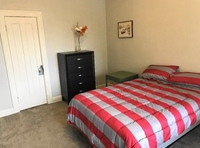
The Hopewell Depot is a two bedroom apartment inside the upper part of a one and a half story building near our main building. Take a tour…

DONATE