Close

Who We Are

Strategic Plan

Board of Directors

Staff

Annual Reports

Overview

Transition Services

Sample Daily Schedule

Facilities Tour

Overview

Measuring Success

Success Stories

For Caregivers

For Professionals

Fees for Service

Apply

Corporate Partners

Planned Giving

Donate

Wishing Well

Exploring Mental Health

Summer Solstice 2026

The Surprising Mental Health Benefits of Farm Environments

By Kala Mansfield, LPC, ATR-P, Clinician and Art Therapist

Explore the healing power of a therapeutic farm and how nature-based environments can improve mood, reduce stress, and support mental wellbeing.

Introduction

Therapeutic working farms are unique residential settings where individuals facing mental health challenges engage in meaningful, structured work in a natural, supportive environment. These farms combine the healing power of nature with community living and purposeful activity to promote emotional and psychological well-being. As more people seek holistic approaches to mental health care, therapeutic farms like Hopewell are gaining recognition for their profoundly positive impact. At Hopewell, residents can participate in daily farm activities such as caring for animals and maintaining a garden that helps feed the residential community year-round, all while receiving therapeutic support. Being part of a working farm offers powerful mental health benefits through immersion in nature, taking on structured responsibilities, and forming a connection with animals.

The Healing Power of Nature

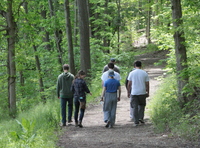
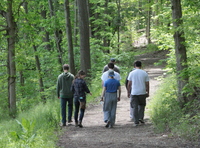
Hopewell’s setting is nothing short of restorative. Spread across 325 acres of rolling pastures, woodlands, and gardens, the farm provides daily exposure to fresh air, wide-open green spaces, and the rhythmic sounds of nature. These elements are more than just scenic; they are a foundational aspect of the healing eco-therapy model. The concept of eco-therapy and nature-based healing is more than just a love for nature; it is supported by scientific evidence. Research has shown that spending time in nature reduces symptoms of anxiety and depression, lowers cortisol levels (the body’s stress hormone), and improves mood. Immersion in natural surroundings helps calm the nervous system, regulate emotions, and build psychological resilience over time. And the Hopewell residents certainly are more than just immersed; they are living it. Each day brings moments of connection with the outdoors, whether through working in the garden, feeding animals every morning, or simply walking through wooded trails. This constant interaction with nature ensures that every moment of the program is rooted in therapeutic progress.

Performing Meaningful Work

Another way that the working farm model provides constant therapeutic moments is that the animals do not go home on the weekends. While traditional therapy groups are generally limited to weekdays, residents are given the opportunity to participate in the farm work crew every morning and afternoon, seven days a week. Some even assist staff in evening animal checks or utilize individual farm visits as part of their personal support plan.

For some individuals, this kind of structure is vital for mental health recovery. Those grappling with depression, anxiety, or PTSD benefit strongly from a predictable routine that fosters a sense of stability and direction. Having daily responsibilities within that routine helps residents stay grounded, motivated, and engaged. These daily farm responsibilities are therapeutically referred to as purposeful work. Feeding a chicken or harvesting a tomato may seem simple, but these acts contribute to the greater whole of the community. Purposeful work builds self-efficacy, a belief in one’s ability to make a difference, which is crucial in overcoming the feelings of helplessness that frequently accompany mental illness and experiences of trauma.

Animal Healers

While there are many types of purposeful work one could engage in, such as cleaning community spaces or assisting in the kitchen, animal care in particular holds powerful healing potential, as interacting with animals has been shown to reduce anxiety, lower blood pressure, and improve mood. Feeding and caring for the animals can create a sense of normalcy and provide practice in caring for other living beings, which in turn supports improved self-care. Residents can also develop bonds with the animals who offer an unconditional presence of trust. Equine Assisted Learning (one of the weekly groups) provides the opportunity to work with, learn from, and care for the horses in a more in-depth manner, allowing residents to understand non-verbal cues from the animals. Learning to read the horses’ non-verbal cues can support learning non-verbal cues from humans, which aids in improving social interactions and relationships. At Hopewell, the animals are not just part of the farm; they are part of the community, providing companionship, responsibility, and a sense of connection.

Closing

At Hopewell, the integration of natural beauty, meaningful work, and animal companions offers more than treatment; it provides transformation. The therapeutic benefits of a working farm environment are clear: nature nurtures emotional balance, structure provides purpose and routine, and the animals offer connection and support. For individuals seeking a holistic and empowering path to mental wellness, therapeutic farming communities like Hopewell offer an alternative model of hope and healing.

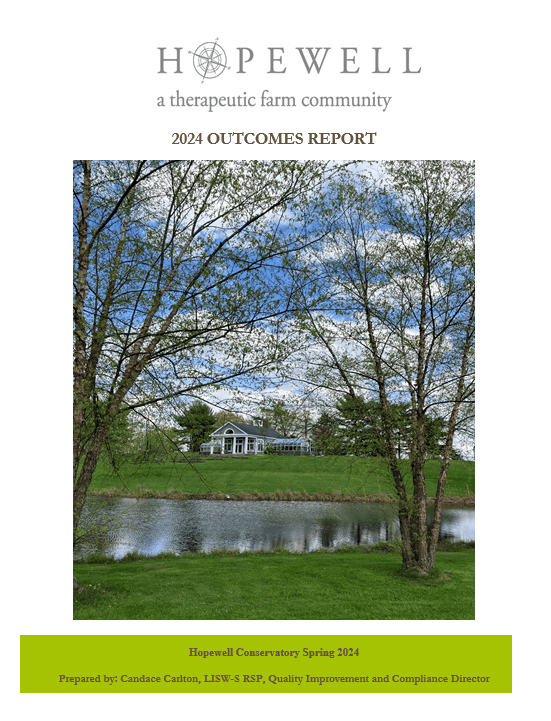
2024 Outcomes Report

In 2006, Hopewell began a systematic data collection program of outcomes research to guide its efforts to help the seriously mentally ill. As part of this program, Hopewell tracks the attendance and participation of each Resident on a daily basis and collects periodic systematic measurements of each Resident’s progress. The data recorded includes participation in work crews, therapeutic clinical groups, social activities, exercise, and community meetings.

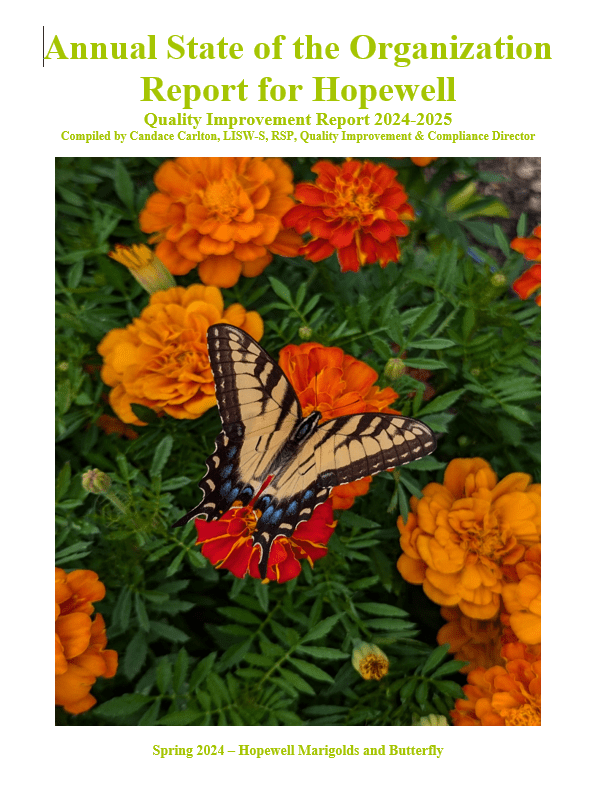
State of the Organization Report, 2024-2025

Hopewell is committed to continually improving our organization and service delivery. The goal of this report is to show the steps Hopewell took throughout 2024 to (1) be more effective and efficient; (2) review access to services; (3) look at satisfaction and feedback; and (4) make future improvement plans. Included here is information such as accomplishments and future plans for quality and performance improvements from each of Hopewell’s staff committees. This information is shared with stakeholders and residents as well as the staff and volunteers who are essential in the process of supporting continual improvements to Hopewell’s Therapeutic Community.

Meet Kala Mansfield

Meet Kala Mansfield, LPC, ATR-P, who joined the Hopewell staff in 2023 as an intern.She was hired as a clinician in May 2024 when she graduated from Ursuline College with her Master’s in Counseling and Art Therapy.

Kala runs the ceramics room, meets with residents for individual therapy sessions and runs the Acceptance and Commitment Therapy (ACT) Art Therapy group. She is also a program facilitator two days per week, runs a weekly Dungeons & Dragons game for residents, and holds a lot of open studio hours.

Art Therapy at Hopewell

For her Master’s thesis, Kala applied Acceptance and Commitment therapy principles (cognitive diffusion, acceptance, values, committed actions, the self as context) and created art activities. It was so successful that she is still running the group today. Some of the activities are physically engaging and some are more a reminder of what you are learning. She explained, “For example, this week we are working on separating from our struggles and gaining new perspectives. Residents were asked to draw something that bothers them, then ripped it up and glued it back together in a collage.”

“Art therapy can be structured many different ways depending on the needs of the residents,” she said. “It really is personalized. Sometimes we have a therapy session and make art together at the same time. The art is grounding and distracting – something to focus on instead of just an emotionally difficult discussion. Sometimes art sessions are educational and I teach life skills such as sewing. You feel more independent when you can sew something functional, and it gives a sense of accomplishment. Other times art is for emotional expression: you don’t have to think, just pour your emotions into the art, then we discuss the art that was created.”

Open studio time is very popular – residents come to the studio for free expressive time. “Working on a project in a group helps with social interaction. People work together and ask for advice and suggestions. It’s a good day when I feel like the art therapy groups were impactful and successful.”

Time for Travel. . . Time for Art

Other than making art and jewelry, Kala’s main hobby is travel. While an undergraduate at Miami University, she lived with a host family and studied in Luxemburg, which afforded her the opportunity to travel throughout France, Italy, and Germany. Graduate school included trips to South Africa and Nepal where she volunteered with United Planet. In South Africa, Kala worked in township schools in disadvantaged community making art with kids who didn’t speak English. In Nepal, she worked with foster kids whose parents were incarcerated.

Kala remembered, “Nepal has a significant part of my heart! I was told by multiple people that they expect to see me again. People are wonderful. They have a karmic culture which inspires them to do good things in this lifetime while looking towards the next. They believe that actions have consequences beyond the immediate future. I took what they call a ‘nice hike’ up Champa Devi, the third tallest hill in the Katmandu Valley in the foothills of the Himalayas. It was an exhausting and exhilarating afternoon.”

Art has always been part of Kala’s life and she expresses herself in many different media. In high school, she painted with watercolors and did graphite drawings. College led her into jewelry making and metalwork. More recently she has gotten into textile art and embroidery.

As far as the future is concerned, Kala said, “I am only a year outside of graduate school and I’m still adjusting to life without homework and with evenings free. Traveling is on my list, specifically to Ireland and to go hiking in Utah. I make a lot of art and wire jewelry. A big goal would be to build a garage workshop. I also just bought my first house and I’m slowly transitioning.”

Thank you, Kala, for everything you do for Hopewell!

Resilience and Physical Activity

By Sami Petty, MSN, APRN, PMHNP-BC, Consulting Nurse Practitioner

At Hopewell, we witness daily how the simple rhythm of physical activity, walking the trails, tending the garden, and mucking stalls, can bring about powerful shifts in mood, mindset, and mental resilience. Science is catching up to what farmers and healers have long known: moving our bodies helps us feel stronger, not just physically, but emotionally, mentally, and spiritually.

In a world that often feels overwhelming, building resilience – the ability to recover from stress, adapt to challenges, and stay grounded through life’s ups and downs – is more important than ever. For individuals living with serious mental illness, resilience is not just a nice idea, it’s a vital part of healing and recovery. Physical activity is one of the most accessible and effective tools for strengthening one’s own resilience.

When we engage in physical movement, several powerful things occur in the brain: feel-good chemicals are released, stress hormones are reduced, and cognitive function improves.

Feel-good chemicals are released: Exercise boosts endorphins, dopamine, and serotonin neurotransmitters that improve mood and reduce anxiety.

Stress hormones are reduced: Physical activity helps regulate cortisol, the body’s primary stress hormone, keeping us from getting stuck in fight-or-flight mode.

Cognitive function improves: Regular movement increases blood flow to the brain, improving focus, memory, and executive functioning. This is especially important for people with serious mental illness who may experience cognitive challenges as part of their condition.

Beyond the science, physical activity helps people reconnect with their bodies, build self-esteem, and feel a sense of accomplishment. At Hopewell, these benefits are multiplied when movement is meaningful, exemplified by caring for animals, harvesting vegetables, or simply walking on the trails. Whether it’s feeding chickens, vacuuming the main house or collecting maple syrup, every act of movement has a purpose. This physical engagement is about being present and connected to our surroundings. This heightened body awareness and connection to the environment enhance resilience and support stronger mental health.

Call to action: How can you support movement and resilience?

  • Start small: A short walk, sweeping the porch, or stretching in the morning can make a difference.
  • Choose purposeful activities: Tasks that feel meaningful, like gardening, cooking, or caring for a pet, engage the body and mind.
  • Make it social: Movement is more enjoyable when shared. Invite others to join in a walk or help with a project.
  • Connect it to nature: Whenever possible, move outdoors. Fresh air and natural surroundings amplify the mental health benefits.

At Hopewell, we’re not just growing food, we’re growing resilience. Through daily, grounded movement in nature, our residents are rediscovering their own strength, one step at a time. Wherever you are, remember movement matters. Not just for the body, but for the mind and spirit, too.

Move to Thrive: How Physical Activity Fuels Emotional Resilence

By Sami Petty, MSN, APRN, PMHNP-BC, Consulting Nurse Practitioner

Learn how movement and exercise help boost emotional resilience, improve mood, and support mental health.

At Hopewell, we witness daily how the simple rhythm of physical activity, walking the trails, tending the garden, and mucking stalls, can bring about powerful shifts in mood, mindset, and mental resilience. Science is catching up to what farmers and healers have long known: moving our bodies helps us feel stronger, not just physically, but emotionally, mentally, and spiritually.

In a world that often feels overwhelming, building resilience – the ability to recover from stress, adapt to challenges, and stay grounded through life’s ups and downs – is more important than ever. For individuals living with serious mental illness, resilience is not just a nice idea, it’s a vital part of healing and recovery. Physical activity is one of the most accessible and effective tools for strengthening one’s own resilience.

When we engage in physical movement, several powerful things occur in the brain: feel-good chemicals are released, stress hormones are reduced, and cognitive function improves.

Feel-good chemicals are released: Exercise boosts endorphins, dopamine, and serotonin neurotransmitters that improve mood and reduce anxiety.

Stress hormones are reduced: Physical activity helps regulate cortisol, the body’s primary stress hormone, keeping us from getting stuck in fight-or-flight mode.

Cognitive function improves: Regular movement increases blood flow to the brain, improving focus, memory, and executive functioning. This is especially important for people with serious mental illness who may experience cognitive challenges as part of their condition.

Beyond the science, physical activity helps people reconnect with their bodies, build self-esteem, and feel a sense of accomplishment. At Hopewell, these benefits are multiplied when movement is meaningful, exemplified by caring for animals, harvesting vegetables, or simply walking on the trails. Whether it’s feeding chickens, vacuuming the main house or collecting maple syrup, every act of movement has a purpose. This physical engagement is about being present and connected to our surroundings. This heightened body awareness and connection to the environment enhance resilience and support stronger mental health.

Call to action: How can you support movement and resilience?

  • Start small: A short walk, sweeping the porch, or stretching in the morning can make a difference.
  • Choose purposeful activities: Tasks that feel meaningful, like gardening, cooking, or caring for a pet, engage the body and mind.
  • Make it social: Movement is more enjoyable when shared. Invite others to join in a walk or help with a project.
  • Connect it to nature: Whenever possible, move outdoors. Fresh air and natural surroundings amplify the mental health benefits.

At Hopewell, we’re not just growing food, we’re growing resilience. Through daily, grounded movement in nature, our residents are rediscovering their own strength, one step at a time. Wherever you are, remember movement matters. Not just for the body, but for the mind and spirit, too.

How Hopewell Helps Families Thrive: Support, Services & Success

By Sarah Turner, Clinical Services Coordinator

It starts with a phone call, most often from a family member looking for help for their loved one. These calls can be difficult as callers recount the mental health struggles, hospitalizations, failed treatments and the impact on their entire family unit. Residential mental health is not covered by most insurance companies. If there is any coverage at all, it is most often for only a few days. Paying for services out of pocket can be a financial struggle for many people. Thanks to our many generous donors, Hopewell is able to offer a discounted rate for those that qualify.

Once an admission happens, Medicaid eligibility is assessed, and if the resident qualifies, we start the Medicaid application process. Medicaid will not pay for residential mental health treatment; however they will pay for medications, medical visits, hospitalizations, lab testing, even vision and dental care. Even if a resident already has a private or commercial plan, Medicaid can be used for secondary coverage. Medicaid establishment is useful for discharge planning as well. There are many providers and mental health services in the Cleveland area that are excellent discharge options for Hopewell residents but require Medicaid establishment.

Discharging from Hopewell is an exciting time for residents, but it can also be anxiety inducing. Leaving residential treatment without having worked in months, sometimes years, brings many challenges. We are able to connect residents with Opportunities for Ohioans with Disabilities Bureau of Vocational Rehabilitation to help with job readiness and job placement.

For residents who are unable to work, Hopewell can help them to apply for disability benefits. Social Security Disability Insurance (SSDI) provides monthly income to individuals who are limited in their ability to work because of physical or mental disability and have contributed Social Security tax contributions through prior work. As of 2019, over two million people received SSDI benefits due to mood, psychiatric, or other mental disability, amounting to one in five SSDI beneficiaries.

Supplemental Security Income (SSI) is a needs-based program that provides financial assistance to disabled individuals with low resources. Eligibility requires a disability determination and financial need determined by income and assets. According to the National Alliance on Mental Illness (NAMI), currently about eight million individuals rely on SSI benefits, including many people with severe mental health conditions. Having income, even disability income, can help foster a sense of independence for individuals who are experiencing mental health struggles and are unable to work.

Entering residential mental health treatment can be a stressful time for individuals and their families. At Hopewell we do everything we can to help ease the financial strain and help our clients foster independence.

Meet Sami Petty, Consulting Nurse Practitioner

I graduated from Malone University in 2011 with my BSN and passed the boards that year. My first job was at South Pointe, Cleveland Clinic on an observation unit.

Fun fact, I went to work at a camp in Pennsylvania for a summer as a lakefront director. It was there that mental health was presented to me as an interest. Many of the staff struggled with mental health. They felt safe coming to talk with me. I felt the Lord really lay on my heart that talking about mental health, and helping others through their difficulties, was a gift that I have, and I should pursue that career. I searched psychiatric nurse positions back in Cleveland and found Windsor Laurelwood Hospital.

I worked at Laurelwood for almost 5 years as a psychiatric nurse with kids from 5-18 years old. After two years I discovered that becoming a psychiatric nurse practitioner was a career path so I studied at Case Western Reserve University. In my studies, I started to develop certain beliefs with treating psychiatry. I believed in a holistic approach and that medication was not the only way to treat mental illness. I started working at Hopewell as a program facilitator with the hope of working here as a nurse practitioner one day.

In 2018, I started working at University Hospital in the outpatient child and adolescent psychiatry division. I saw mostly teens and young adults, diagnosing, prescribing and providing some psychotherapy. I was able to integrate working at Hopewell twice a month.

Within the last year I started teaching full time at Case Western Reserve University. I teach 3 classes in the BSN program: Wellness, Psychiatric Mental Health Nursing, and Teaching and Learning in the Community.

A Bit About Me Personally

I really love music and sports. My favorite instruments are piano and guitar and I play in the worship band with my husband at church. They are a good outlet and way of expression for me. I played soccer for one year at the college level. I love the Cleveland Browns… most of the time. We have a pickleball court in our driveway and really try every and any sport we can. I used to be a triathlete – I raced for 6 years and loved it. Now I would say that my two young sons are my hobby!

I love writing, creating, filming, and editing. Currently, I am trying to start a podcast with a friend about mental health and mindset. I also enjoy speaking in front of others. I’m consistently looking for opportunities to speak on meaningful topics to help others in their learning process.

Truthfully, my faith is my foundation. It holds me together and provides a path forward. Without a doubt, God has called me to this work. Looking back, I can see He’s been orchestrating everything to bring me to where I am today. This is my platform and how I’m to connect and love others well.

I realize that I can’t fix everyone with a mental illness. But I’m going to do the best I can to be there, support them, and help them manage their symptoms. Mental illness doesn’t have a formula. Yes, there are a group of symptoms that lead to a certain diagnosis, but symptoms also look different for everyone. I’ve seen the look of desperation in residents/patients, the look of “please help me.” If I can be present and be there for them in that moment, then it’s worth it.

Working at Hopewell

I see residents weekly for one-on-one appointments where we discuss their progress at Hopewell and their concerns with medication treatment. I collaborate with the clinical team to help provide the best care I possibly can. I love to walk and see residents outside in nature, as I find being outside can prompt richer conversations.

Hopewell is very important to me personally. I’ve seen Hopewell in different capacities, and I love every bit of it. No place is perfect. But Hopewell is one of those places that you fall in love with so much that the negatives don’t really matter as much. It’s so unique but in my eyes the best way to care for those with mental illness. It doesn’t make sense to me that more places like Hopewell don’t exist. I’m so honored to be a part of Hopewell. For however long my time is here, I appreciate every day that I have the privilege to serve these residents. The staff here genuinely care. It’s authentic. You can’t find that in many places in healthcare.

A great day at Hopewell is working with residents, checking their progress, spending time outside with them, joining the community for lunch and connecting, and collaborating with staff.

What Might the Future Hold?

I’m presenting a poster for Hopewell at the American Psychiatric Nursing Association national conference in October 2025. I plan to publish more in journals or other sources. One life goal is to write a book. In addition to teaching at Case, I’m currently in a Doctor of Nursing program and plan to do my project on engagement, specifically with nursing students’ engagement in their lecture classes. I’m trying to bring holistic and experiential learning into the classroom.

From Farm to Table: The Link Between Agriculture and Mental Health

By Jennifer Miller, Food Service Manager and Wellness Educator

Sometimes healing begins at the table.

The Farm to Table movement has grown from a culinary trend into a broader lifestyle choice embracing health and sustainability. The physical benefits of eating fresh, locally sourced and homegrown foods are well known, but fewer people are aware of the amazing impact that it can have on mental health.

Fresh fruits and vegetables and whole foods contain higher levels of the essential vitamins and minerals that are vital for brain functioning. Vitamins and antioxidants are abundant in the rainbow of fresh garden produce and are directly linked to improved mood, reduced anxiety and lower the risk of depression. Garden fresh fruits and vegetables are picked and eaten at their peak of ripeness when they are the most nutrient dense. Store-bought produce is picked early so that it will last longer while in transport or storage, meaning it has not had a chance to fully develop its rich potential.

Our busy schedules often lead to poor choices when it comes to mealtimes and the food we eat. The supermarkets are loaded with processed and prepackaged convenience foods that are very enticing to a hectic lifestyle. Unfortunately, these foods offer very little nourishment to the mind and body. People suffering from depression, anxiety and other mental illnesses are even more likely to choose these foods rather than fresh fruits, vegetables and meat. This may be due to lack of access to fresh foods, or just the motivation to prepare food from scratch. Often people do not understand the power that whole fresh foods have to nourish and heal the mind and body.

Farm to Table at Hopewell

The farm and garden at Hopewell offer an amazing opportunity for clients to learn about and raise the food that they eat each day. Many of the clients come in with very poor diets and little knowledge of what a nourishing meal looks like. Here they have an opportunity to help with planting vegetables and getting their hands into the earth. They see the plants grow, producing the fruits of their hard work. They care for the animals, feeding and watering them, and collecting fresh eggs. There is a sense of pride when they help harvest and prepare the produce. A craving for the simple, yet delicious flavor develops. Clients learn skills to grow their own garden or seek locally sourced foods and the value of a nutritious meal.

Making conscious choices about food empowers individuals to take control of their health and well-being. Cooking meals from scratch using fresh ingredients can create a sense of accomplishment and purpose. For many, this simple act of choosing what to eat and how to prepare it becomes a powerful form of self-care. In a world where mental health struggles are increasingly common, the solutions don’t always have to be high-tech or clinical. Farm to Table isn’t just a way to eat, it’s a healer, and a path to greater mental clarity and good health.

Spring 2025: Spring has finally arrived at Hopewell, bringing warmth, light, and renewal that make this season so special.

Learn more about Hopewell’s programs, staff and residents, and purchase your Summer Solstice tickets!

DONATE